CLUBS, CATTERIES AND CAT FANCIERS (1880s - 1903)

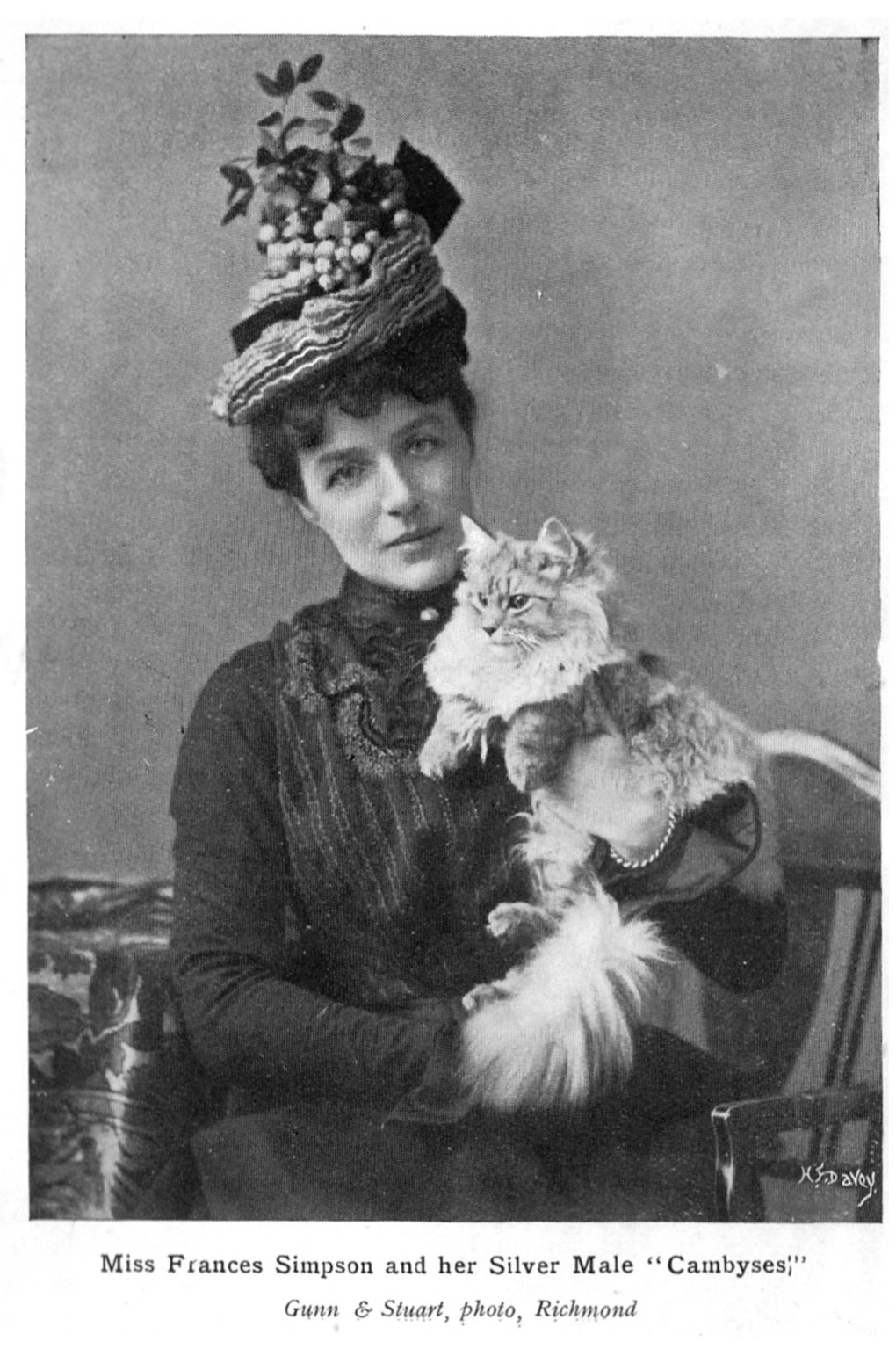
Between the 1870s (when Weir arranged the first cat show) and 1903, when Frances Simpson's "The Book of the Cat" was published, a considerable number of cat clubs were formed and several catteries and cat fanciers (many aristocratic) came to prominence. It is often remarked that if you put 3 Englishmen together, they will form a club - this certainly seems to have been the case in the early days of the cat fancy! Some were based on regional lines and some championed particular breeds or colours. A peculiarity of the British cat fancy, still evident today, is that each colour was considered a separate breed, rather than being a subdivison of a breed. This article is concerned with the cat clubs, notable catteries and prominent cat fanciers of those days; as it is these catteries who have laid down some of the earliest bloodlines and those characters who shaped the early cat fancy in Britain and the USA. The following is drawn from France Simpson's work.

I will proceed to give a glance around at the Cat Fancy in general before mentioning particulars of Clubs and Cats of the present day. The question has often been asked whether the Cat Fancy will every become as popular and fashionable as the breeding of dogs, poultry, and birds? I think this question may be answered in the affirmative, when we consider that during last year a dozen and more large cat shows have been held in different parts of England and Scotland, to say noting of numerous mixed shows where a section for cats was provided. Every year the number of fanciers increases, and although this particular hobby is almost entirely confined to the gentler sex, yet it is really surprising to find how many more men are beginning to take an interest in the pussies, and are keenly excited in the winnings of the household pet or the king of the cattery. As a friend once said to me, "You know what men are; if only the cats win prizes, my husband does not mind, but it is a different matter if I return from a show with no award; then he declares we must get rid of all the cats!" I am afraid that cat fanciers must be looked upon as a rather quarrelsome set, and there is no doubt that petty jealousies and spiteful gossip retard in many ways the development and improvement of the fancy.
Another question that is often asked is whether cats can be made to pay - or, in other words, whether cat breeding is a profitable undertaking. From my own experience, which has extended over a number of years, I can unhesitatingly say I have derived not only much pleasure but a good deal of profit from keeping cats, and also I have started many friends in the fancy who have gone on a prospered [note: in those days pedigree cats were rare, cats lived for an average of 9 years, distemper regularly wiped out large numbers of cat and imperfect kittens were destroyed without a second thought]. Cat keeping on an extensive scale means a large outlay, followed by constant and untiring attention. I do not intend, however, in this chapter to enter into any details as to the care and management of cats, for this and other subjects connected with their interests will be fully dealt with later on.

In my preceding chapter I alluded to the first Cat Show held at the Crystal Palace in 1871. The exhibition of cats has become an annual fixture, and year by year greater interest has been manifested, better classification given, and a larger number of cats exhibited. It was, therefore, considered advisable to have some definite organisation, and the National Cat Club was instituted in 1887, with Mr Harrison Weir as president. I will now proceed to give a list, which I believe to be complete and correct, of the various other clubs and societies in England and America which have been organised and which are all at this present time in thoroughly good working order.

LIST OF CAT CLUBS AND SOCIETIES (1903)


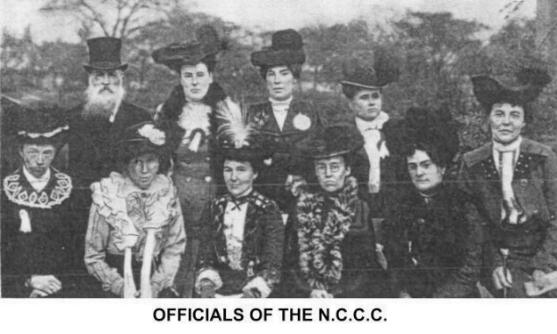
The Committee of the Northern Counties Cat Club


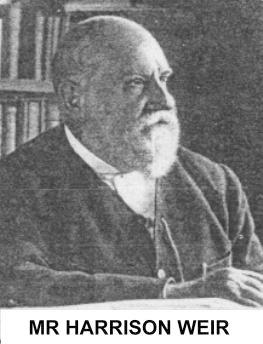
Mr Harrison Weir, former president of the National Cat Club and organiser of the first British cat show.


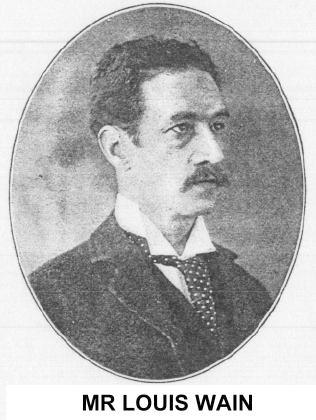
Mr Louis Wain, new president of the National Cat Club.


Since the formation of the National Cat Club, many changes in its constitution have taken place. On the retirement of Mr Harrison Weir from the presidency, Mr Louis Wain was appointed, and still holds the office. The NCC is fortunate in having so energetic a Hon Sec and treasurer as Mrs Stennard Robinson, whose name is so well known in the "doggy" world. The following is a list of officers of the National Cat Club at the time of writing, and a summary of the objects for which the Club was organised:-

THE NATIONAL CAT CLUB

Patron:- HH, Princess Victoria of Schleswig Holstein.
President:- Her Grace the Duchess of Bedford.
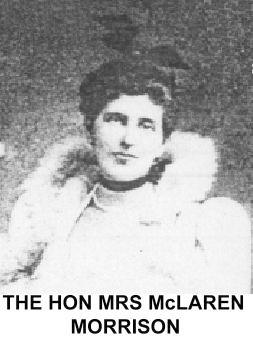
Vice-Presidents:- The Right Hon the Countess of Warwick, The Viscountess Maitland, The Marchioness of Dufferin and Ava, The Countess of Aberdeen, The Lady Hothfield, Lady Willoughby, Lady Reid, The Hon Mrs McLaren Morrison, The Lady Granville Gordon, Lady Decies, The Hon Mrs Baillie, Madame Ronner, Mr Isaac Woodiwiss, Mr Sam Woodiwiss.
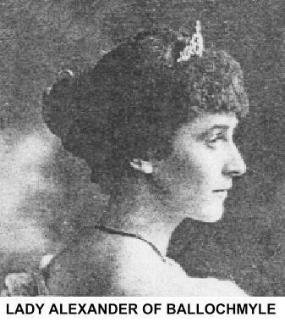
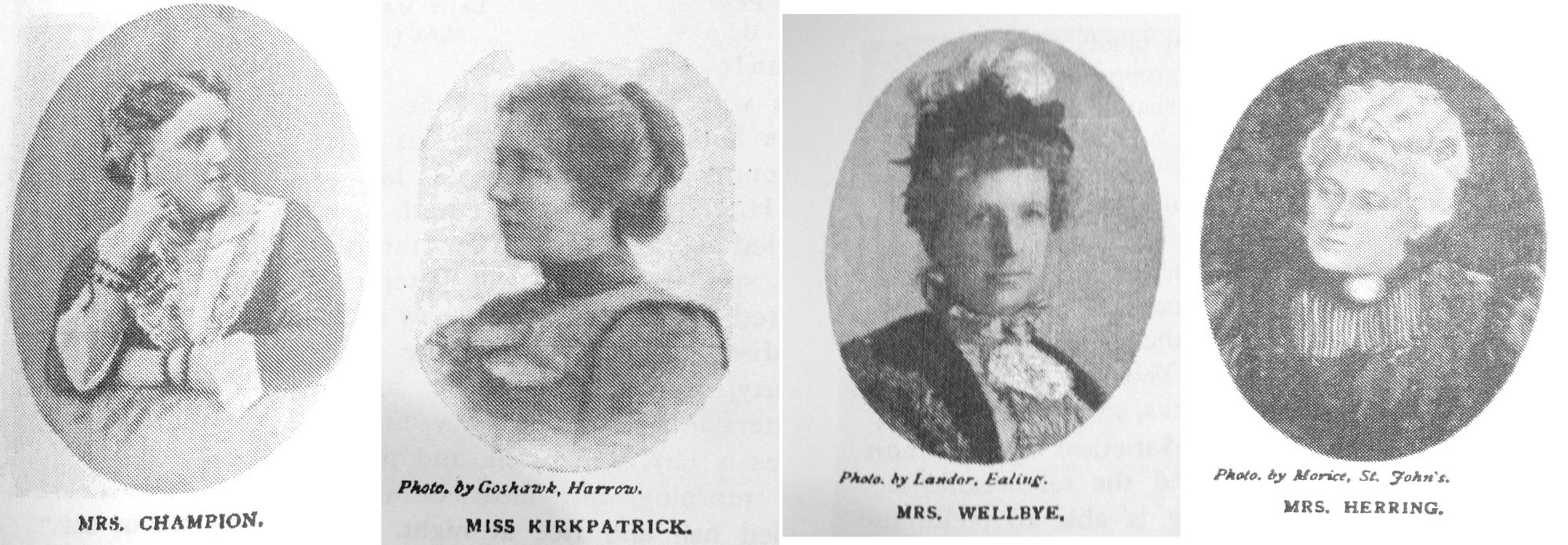
Committee:- Louis Wain (President), Lady Decies, Lady Alexander, The Hon Mrs McLaren Morrison, Mrs Vallance, Mrs Balding, Miss Hamilton, Dr Roper, Mrs Herring, Mrs Ransome, Mrs G H Walker.
Hon Sec and Treasurer:- Mrs A Stennard-Robinson, 13 Wyndham Place, Bryanstone Square, W (Telegraphic address - "Bow-wow, London).


Lady Alexander, one of the Committee members of the National Cat Club


The Hon Mrs McLaren Morrison, one of the Committee members of the National Cat Club

The National Cat Club was organised (1) to promote honesty in the breeding of Cats, so as to ensure purity in each distinct breed or variety; (2) to determine the classification required, and to encourage the adoption of such classification by breeders, exhibitors, judges, and the committee of all Cat Shows; (3) to maintain and keep the National Register of Cats; (4) to assist the Showing and Breeding of Cats, by holding Cat Shows under the best sanitary conditions, giving Championship and other prizes, and otherwise doing all in its power to protect and advance the interests of Cats and their owners.

The National Cat Club is also a Court of Inquiry and Appeal in all matters relating to Cats, or affecting the ownership of Cats, and so saves the expense to its members of litigation.

The National Cat Club founded its Stud Book some twelve years ago, and it is the only reliable source of information concerning the pedigree of Cats. The Registration Fee is 1 shilling for the Register of Names, but for the Stud Book the fee is 5 shillings for Approved Cats exhibited under NCC Rules.

The two principal shows of the National Cat Club are held annually at the Botanical Gardens, in connection with the Ladies' Kennel Association in June, and at the Crystal Palace in October. In 1901 the total number of cats shown at the Palace was 601, and the entries numbered 1,021. There were 106 classes provided for long- and short-haired cats. The following is the definition of the classes:-

DEFINITION OF CLASSES

Open Classes - Open to all Cats, Prize-winners or Novices.
Limit Classes - For Cats of any age that have not won Three First Prizes.
Novice Classes - For Cats of any age that have never won a First Prize at any Show.
Special Novice Cats - For Cats or Kittens over 6 months that have never won a Prize of any sort at a Crystal Palace Show.
Neuter Classes - For Gelded Cats.
Stud Classes - For Male Cats that have sired Kittens which are entered an on exhibition in this Show.
Brood Queen Class - For Queen Cats whose Kittens are entered in this Show.
Selling Class - For Cats of any colour or Sex to be sold at a price not exceeding 3 guineas in Long-haired or 2 guineas in Short-haired and Foreign.
Ring Class - For Cats shown in collar, and lead.
Kitten Classes - Single entries to be over 3 months and under 8 months, unless otherwise stated.
Brace - For 2 Cats, age over 6 months.
Team - For three or more Cats, age over 6 months.
No Cats can be entered in brace or teams unless also entered in one other class.

The money prizes in each class are First, £1; Second, 10 shillings; Third, 5 shillings. The list of special prizes, including Challenge Trophies and medals, numbered 262 at the last Crystal Palace show in 1901. In addition to the two regular fixtures of the NCC, other cat shows are held in different places in connection with the Club and under its rules. [Note: the class definitions demonstrate that cat shows were modelled on agricultural/poultry shows]


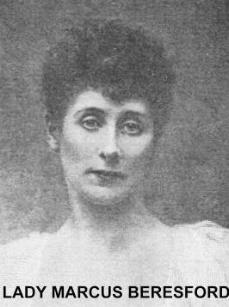
Lady Marcus Beresford, founder of the second of Britain's two major cat clubs in 1898. The American Beresford Cat Club was also named after her.


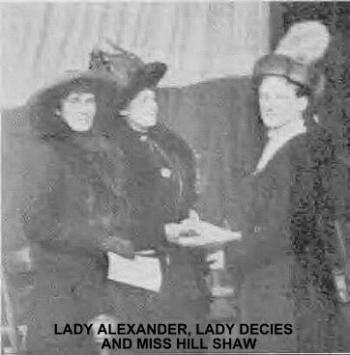
Lady Alexander, Lady Decies, and Miss Hill Shaw, three prominent cat fanciers.


The National Cat Club reigned alone until 1898, when Lady Marcus Beresford started and founded the Cat Club. This ardent cat lover has done more for pussy than anyone in the fancy. She is most lavish in her generosity and unwearying in her efforts to promote the welfare of the Club. It was Lady Marcus who first started the idea of holding cat shows in aid of charity. The Cat Club's first show, held at St Stephen's Hall, Westminster, in 1899, was in aid of the Children's Guild of the Deptford Fund. In 1900 the families of the soldiers and sailors who had fallen in the Transvaal were benefited to a large extent by the proceeds of the show. In 1901 the Children's Hospital, Great Ormond Street, was the charity selected to receive a handsome donation of £100. The Westminster shows have always been splendidly managed, a noticeable feature being the wonderful array of special prizes offered for competition. The following is the list of officials connected with the Cat Club:

THE CAT CLUB
(Founded by Lady Marcus Beresford)

The Objects of the Club are the general good of the Cat, the promoting of true breeding of Cats, the holding of a Winter Show, so that Cats may be exhibited at their best, and taking other steps that shall be for the welfare of the Cat. The annual Subscription is £1 1 shilling, payable on election, and on the 1st of January in each succeeding year. A Stud Book and a Register of Cats are kept by the Club.

Presidents - Lily, Duchess of Marlborough; Edith, Duchess of Wellington; Lord Marcus Beresford.
Vice-Presidents - Isabella, Countess Howe; Viscountess Maitland, Viscountess Esher, Lady Ridley, Lady de Trafford, The Hon Mrs Bampfylde, Lady Lister, Lady Gooch, Mrs Barnet, Mrs Alfred Bles, Mrs Walter Campbell, Mrs Chaine, Mrs George Dawkins, Mrs Cary Elwes, Mrs C Hill, Mrs King, Mrs Nicholay, Mrs Tottie, Mrs Peston Whyte, Lord Walter Gordon Lennox, A E Bateman Esq, Colonel Chaine, Henry King Esq.
Committee - Lady Marcus Beresford, Mrs Vary Campbell, Mrs Dean, Mrs Paul Hardy, Mrs C Hill, Mrs Anderson Leake, Mrs R Blair Maconochie, Mrs Neild, Mrs Simon, Mrs Mackenzie Stewart, Mrs L P C Astley, Mr Gambier Bolton, Rev P L Cosway, Mr R W Hawkins, Mr E W Witt.
Hon Treasurer - Lord Marcus Beresford.
Hon Secretary - Mrs C J Bagster, 15A, Paternoster Road, London, EC.

There is really ample room for two parent clubs, as the Fancy is making such rapid strides, and, no doubt, well-appointed shows with good classification do a great deal to benefit breeders and assist fanciers, Between the National Cat Club and the Cat Club there is one point of serious disagreement, namely, as regards registration. At present members are expected and required to register their cats in each club if they exhibit at the respective shows. It would be a great benefit to the cat world in general, and to the exhibitor in particular, if some arrangement could be made whereby one independent register should be kept, and that both clubs might work together and assist each other in endeavouring to scrutinise and verify all entries made in the joint register, so that inaccuracies should be detected and fraud prevented.

The Northern Counties Cat Club is affiliated with the NCC, and has quite a large number of members. This enterprising club holds two shows in Manchester every year, which hitherto have been capitally managed by the energetic Hon Sec. As a natural sequence a Midland Counties Club has lately been started, having its working centre at Birmingham. No doubt arrangements will be made for holding a cat show in this or some other equally central Midland town.

[Additional notes: The Midland Counties Cat Club was formed in Wolverhampton in 1901 with Lady Marcus Beresford as President, Mrs Geo Cadbury as Vice-President and Miss Cope as Hon Sec. In 1902, its committee comprised:

President:- Lady Marcus Beresford
Chairman:- Mr C W Witt
Hon Treasurer:- Mrs Witts
Hon Secretary:- Miss Cope
Committee:- Mrs Robinson, Mrs Deakin, Miss Gertrude Cope, Miss Parr, Mr F Howell, Mrs Collingwood, Miss Cartwright, Mrs Spafforth, Mr T Furry, Mrs Walters

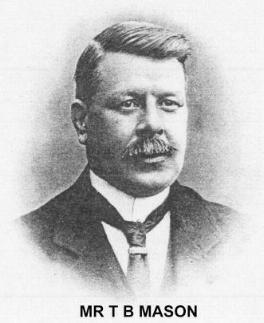
Its first show was held at The Prince of Wales Assembly Rooms, Broad Street, Birmingham, on 2nd and 3rd December, 1902. 259 cats were penned and exhibitors complained that the Hall was too small such that some of the pens had to be "topped" (stacked). The Judges were Lady Marcus Beresford, Miss Beal, and Mr T B Mason. It was reported that over 2000 people paid for admission, and between 300 and 400 were left disappointed when the doors closed at 7 pm on the final day of the show. ]

The Scottish Cat Club is in a flourishing condition, and has been steadily working up members since 1894. A show is annually held in Edinburgh, and fanciers over the border are taking a much keener interest in cats.

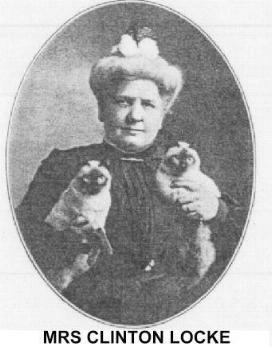
In America the fancy has gone ahead in a wonderful way. It was in 1895 that the first cat show of general interest was held at Madison Square Gardens, New York. There had previously been some private attempts to have exhibitions of cats in connection with poultry and pigeon shows. In 1896 an American Cat Club was organised, which did some good work. Then Chicago started a Cat Club in January, 1899, and this was followed by a most successful enterprise on the part of Mrs Clinton Locke, who founded the Beresford Cat Club, called after Lady Marcus Beresford and now numbering about 200 members. In January, 1900, the club held its first big show. The classification was of a most comprehensive nature, and the list of special prizes a very liberal one. This show is now an annual fixture, and the Cat Club of England sends medals and prizes to be competed for. Many of the best cats exhibited at these shows have been exported from England, and Americans are very keen in trying to procure the very best possible stock - high prices in many cases being offered to induce English fanciers to part with prize-winning specimens.


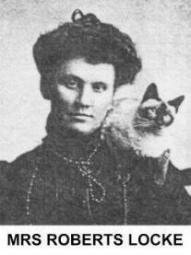
Mrs Clinton Locke, founder of the Chicago-based Beresford Cat Club in 1899. It had strong ties to the Cat Club in England, founded by Lady Marcus Beresford in 1898.


The following is a list of officials of the BERESFORD CAT CLUB OF AMERICA

Officers: Mrs Clinton Locke, 2825 Indiana Ave, (President); Mrs Charles H Lane, 5323 Madison Ave, (First Vice-President); Mrs F A Howe, 3941 Grande Boulevard (Second Vice-President); Mrs A A Michelson, 220 E 60th Street (Corresponding Secretary); Miss L C Johnstone, 5323 Madison Ave (recording Secretary); Mrs Elwood H Tolman, 5403 Madison Ave (Treasurer).
Directors: Mrs J H Pratt, 5816 Rosalie Court; Mrs Lincoln Nicholson, Lee Centre, Illinois; Miss Louise Fergus, 3229 Sheridan Road; Mrs Blanch P Robinson, 6, Langley Place; Mrs Vincent E Gregg, 736 North Park Avenue.

At the Cat Show held in January, 1902, as many as 75 classes were provided, and it is plain to see from these that Americans have not the same antipathy for broken colours - that is, cats with white markings - as we have in England, as there are classes specially for orange and white, and black and white cats. In another part of this work I shall refer to varieties and breeds of cats existing in America which differ from those in England [note: the Maltese and the Maine Coon]. The Beresford Cat Club have an extremely well arranged stud book and register, which is published annually. I am sure that the Cat Fancy in America has a great future before it, and we cannot help being greatly struck with the earnestness, thoroughness, and enthusiasm with which Americans have taken up this hobby. When we consider the great distances in the States and the paucity of good stud cats, and the few opportunities of exhibiting at well organised shows, we cannot fail to admire the energy and enterprise displayed by our American fellow-fanciers.

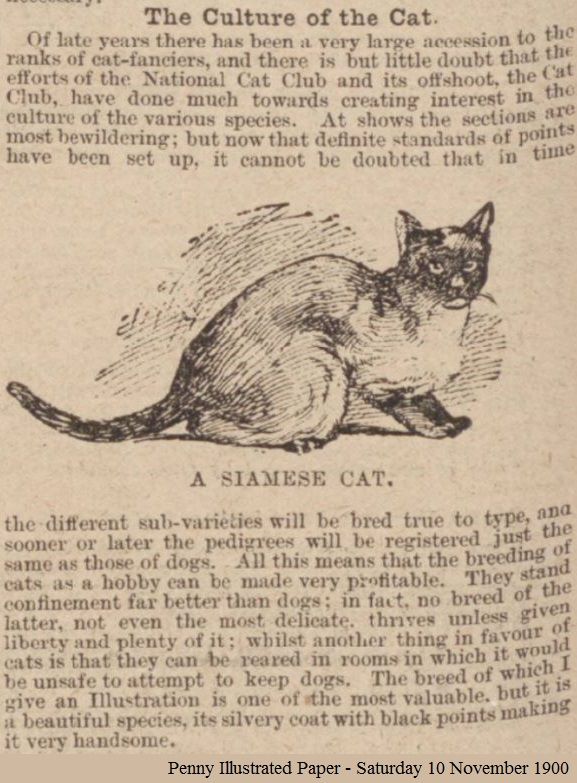
Specialist clubs for Cats are of very recent growth. The first was started by an ardent breeder of silver Persians in 1900. It was then called the Silver Society, and it included smokes and silver tabbies. The title of this society has since been changed to the Silver and Smoke Persian Cat Society. In the following year Blue Persian Breeders bestirred themselves and formed a society for this most popular breed. In the same year the Orange, Cream, and Tortoiseshell Society, the Siamese Club, and the Chinchilla Club were inaugurated, also a Manx Club came into existence, and two clubs for Short-haired cats were started. Particulars concerning these specialist societies and their objects will be found in future chapters on the various breeds of cats. It will be noticed by the list of clubs given, that for brown tabby and black and white Persians no societies have as yet been formed, but doubtless ere long these varieties will be gathered into the fold of specialist clubs.

A good deal of discussion has taken place in catty circles as to the desirability of having specialist societies, but I am sure a vast and marked improvement has taken place in the different breeds since their formation, and the fact of publishing a standard of points has certainly assisted breeders in coming to a more correct idea of what constitutes a good cat of a particular breed. The number of challenge prizes, medals and specials offered by those societies at various shows act as an incentive to exhibitors, and thus entries increase and competition becomes keener. Specialist clubs are not altogether popular with the parent clubs, who regard them with rather a suspicious and jealous eye. They think that exhibitors may join these less expensive societies and yet continue to show and win prizes without subscribing to the club that holds the show. No doubt there is something in this, and specialist clubs should be ready and willing not only to offer prizes for which their members only can compete, but they ought also to guarantee classes and perhaps give a donation towards the expenses of the show.

There have been quite a number of catty cases in our courts of late years, and these generally seem to cause considerable amusement to the legal as well as to the public mind. At a recent trial, where a lady was wrongfully accused of starving a Persian cat, the magistrate, wishing for information, inquired of the witness (who was a veterinary surgeon) how long a cat could live without food. The reply was, "I am sure I could not say, sir, for cats are the funniest animals we have to deal with." And it is very true that these creatures, being so complex, require to be specially studied, and our principal veterinaries, who lead busy lives, are just a little superior to the many ailments and infirmities of these too often despised animals. It is therefore a subject of satisfaction of cat fanciers that two clever and kind animal-loving men have taken up the doctoring of cats, and by personal experience are learning "pretty pussy's ways" in sickness and in health. Mr Ward, of Manchester, and "Salvo," of Hertford Heath, are now two household names in the cat fancier's vocabulary. To the many excellent remedies prepared by these clever specialists I shall refer later on in my work. Suffice it here to say that when in doubt or difficulty about your pussy's state of health I would recommend you to write to either of these common-sense practitioners.

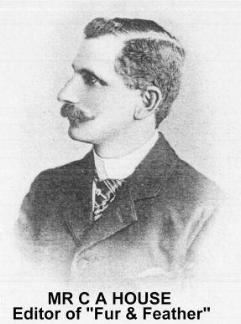
The cat literature of the present day has been steadily on the increase. The first paper to supply special cat columns was Fur and Feather, which as its title infers, treats besides of birds, rabbits, poultry, cavies, mice. This weekly paper has a large circulation amongst the various fanciers. In 1899 Our Cats was started, and is widely read by the ever-growing circle of cat lovers, and claims the unique distinction of being "The only newspaper in the world solely devoted to cats." In both these papers there are stud advertisements of cats and a register of visits of queens and births of kittens. In America the chief organs in the cat world are The Cat Journal, The Pet Stock News, and Field and Fancy.


Mr C A House, editor of Fur and Feather newspaper


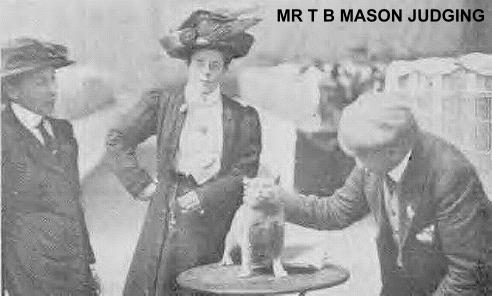
Mr T B Mason, Judge


[Additional notes: After much bickering between the National Cat Club and the Cat Club, the GCCF was founded in 1910 as the sole registering body and was based at 65 and 66 Chancery Lane, London and the Telegraphic address was "Doggrel, London". For interest her is a list of Officers of the GCCF for the year 1912 along with the Delegates and the Clubs they represented (some names will by now be familiar to the reader):

Chairman - Russell Biggs;
Honorary Treasurer - R Little;
Secretary - S Desborough.
Delegates For 1912 - 1913: Gertrude Lady Decies, National Cat Club; Mrs Ransome, National Cat Club; Mrs Valiance, National Cat Club; Mr R Little, National Cat Club; Mrs Mason, Southern Counties Cat Club; Mrs T Watson, Southern Counties Cat Club; Mrs Slingsby, Scottish Cat Club; Mrs Forsyth Forrest, Midland Counties Cat Club; Mrs Spofforth, Midland Counties Cat Club; Miss A M Burton, Northern Counties Cat Club; Mr H Walker, Northern Counties Cat Club; Miss KerswUll, Black and White Club; Miss Jay, Blue Persian Cat Society; Miss Simpson, Blue Persian Cat Society; Mr W H Powell, Brown Tabby Persian Cat Society; Miss Wood, Chinchilla & Silver Smoke Society; Miss Hill Shaw, Neuter Cat Society; Miss H M Lea, Orange, Cream and Tortoiseshell Society; Miss Hill Shaw, Shorthair Cat Society; Mrs Robinson, Siamese Cat Club; Mrs Fosbery, Newbury Cat Club; Mr E T Cox, Richmond Cat Club; Mr W J Wilson, Wilson’s Ltd. Cat Club.

In 1912 there were 72 Prefixes and Affixes registered with addresses ranging across the north and south of England, one in Wales and two or three in Scotland. The Prefixes/Affixes were mainly just the names of the houses, villages or towns in which the breeders lived (as suggested by Frances Simpson several years earlier) for example: "Kensington" (Miss Kerswill of West Kensington); "The Cottage" (Mrs Singleton, The Cottage, Melbourne, Derbyshire) or "Thorpe" (Mrs Slingsby, Thorpe.Underwood Hall, York).

GCCF News was published in the monthly "Our Cats" journal. This continued until 1919 when "Fur & Feather" was appointed as its Official Journal. Around 60 years later, "CATS" was launched, taking over from Fur & Feather and was recently renamed "Our Cats" (it being owned by Our Dogs Publishing Company Ltd), therefore coming full circle. GCCF fees in 1912 were: Registration 1 shilling Transfer 1 shilling, Prefix or Affix 1 shilling and sixpence, Annual Maintenance for same 1 shilling. Entry in Stud Book 5 shillings., Championship Show Licence 21shillings, Non-Championship Show Licence 2 shillings and sixpence per 100 Entries over 100, Licence for Show of not more than 10 Classes 2 shillings and sixpence, Copy of Pedigree 1 shilling, GCCF Stud Book, Vol. 1, 2 shillings and sixpence.]

Notable Catteries

Before entering upon a description of the various breeds, it may be interesting to my readers to give a short account, with illustrations, of the catteries of some well-known fanciers who have not confined themselves to any special breed or variety.

Lady Decies' catteries, at her pretty summer residence at Birchington-on-Sea, are indeed most perfect in their arrangements, and every detail for the comfort and well-being of the inmates is considered. The stud cats have separate single houses, with good-sized wired-in runs, and luxurious and cosy sleeping apartments in the rear. The main cattery is in a sheltered portion of the grounds, and will accommodate a large number of cats. The runs are arranged with boxes, benches, chairs, and ladders, and the sleeping places, built of brick, are most comfortably fitted up. By a system of wooden blinds the strong sea breezes and the bright rays of the summer sun can be regulated. There are side blinds and top blinds. The floors of the spacious catteries are wood, covered with cork carpet, and they are raised about a foot from the ground, so that ther is a free current of air passing under the boards, thus securing absolute freedom from any damp.

In the house there are three rooms set apart by Lady Decies for her pussies. In two of these the queen mothers have their families, and the other is used as the cats' kitchen. The beds for the cats are specially designed by Lady Decies. The walls of the cats' rooms are adorned with pictures by Louis Wain, and there is display of prize cards won by Lady Decies' famous cats. "Zaida," so well known as the winning silver female, is the privileged occupant of Lady Decies' boudoir, and here the aristocratic little lady makes herslef at home on the soft cushions and couches.

The famous "Lord Southampton" is now in the possession of Lady Decies, and resides in one of the up-to-date catteries at Beresford Lodge. He was purchased at a very high price. Since his change of ownership he has not frequently appeared in public, but in the past he was a noted winner. It is, however, as a silver sire that he attained his success and made his name. It is well-nigh impossible to mention his numerous winning children. His name in a pedigree is a safe guarantee for quality and colour.

The two Siamese cats have warm quarters in the stable cottage. Lady Decies' pets comprise both long- and short-haired cats. Among the latter "Xenophon" is generally regarded as the best specimen of a brown tabby, and has a long prize-winning record. A woman and a boy are kept to attend to the wants of these aristocratic animals.

The Bishopsgate cattery may be said to have won a worldwide renown, and those who have been privileged to visit the ideal residence of Lady Marcus Beresford will agree with me that it is impossible to give any idea either by photography or description of the delightful dwelling places set apart for the pussies belonging to this true lover and fancier of the feline race.

Here is the cat cottage, where the attendant has her rooms, and where the other apartments are especially fitted up for the cats.  Here the Siamese have their quarters, and the sun streams in at the windows, which face due south. Opposite to the cottage, as may be seen in the illustration, are some of the cat houses, and in the centre is the kitchen. The cat attendant stands at the door, and some of the pussies are having their mid-day meal. The celebrated "Blue Boy II" occupies a house, and in the background is a grass run, securely wired in, which is used as a playground for the pussies. In the hot summer weather this is shaded by the lovely spreading beech trees of Windsor Park.

The stud cats' houses are splendidly arranged with sleeping places and nice large runs. The space in the centre in front of these runs is used as an excerise ground for the females and kittens. The garden-house cattery is, indeed, an ideal one, being in winter an ivy-clad retreat. This house is divided into two apartments, and these are generally used for the queen mothers and their families. On the shelves along the windows the pussies sit and sun themselves.

Truly the lives of inmates of the Bishopsgate catteries are spent in peace and plenty, and when their little span of life is over they find a resting place under the shadow of the grand old trees, and a little white tombstone with a loving inscription marks the spot of pussy's last long sleep.

Lady Marcus Beresford has had almost every breed of cat under the sun at her catteries, but of recent years she has specially taken up silvers, blues, and Siamese, and a grand specimen of each of these varieties is in the stud at Bishopsgate. Amongst some of the celebrated cats owned by Lady Marcus Beresford I many mention "Lifeguard," a grand orange of massive build; "Tachin" and "Cambodia," two imported Siamese with perfect points; "Cora," a tortoiseshell-and-white of great beauty, and "Kismet," a brown tabby of exquisite shape, both imported; and "Cossy," a smoke that has found a home in America. At the present time three of the most notable inmates of the Bishopsgate cattery, representing blues, silvers, and Siamese, are "Blue Boy II," "Beetle," and "King of Siam."

One of the largest catteries in Scotland, where the fancy grows apace, is owned by Mrs Mackenzie Stewart, of Seagate House, Irvine. Mrs Stewart has possessed several notable cats of different breeds. Her blue stud cat "Ronald" has made himself a name in the south of England as well as in the north. Mrs Stewart has had silvers, creams, brown tabbies, and is now the owner of the celebrated black stud cat "Dick Fawe," who has sired many winning kittens. The severe weather of this part of Scotland seems to suit these Persian cats, for a healthier, hardier set of pussies one could not wish to see than those disporting themselves in the pleasantly situated catteries of Seagate House. Mrs Mackenzie Stewart is a most enthusiastic fancier, and often takes the long journey down South to bring her pets to the London shows. She has acted as judge in Scotland and England, and a contingent from the Seagate cattery is generally to be seen and admired at most of our large shows.

To old fanciers and exhibitors the name of Mrs H Warner is familiar. It was as Mrs Warner in 1889, that the Hon Mrs McLaren Morrison first exhibited a black cat called "Imp" at the Crystal palace Show; and as black cats are said to bring luck, this puss took a first, and, thus encouraged, his owner commenced her "catty" career. In the following year, I note, by the catalogue, that Mrs H Warner had fourteen entries, and amongst these were two imported cats and the celebrated black Persian "Satan," who departed this life in 1902. As late as 1897 this superb fellow, with glorious orange eyes, won everything he could (in spite of his age) at the Crystal Palace. There remains a worthy son of this worthy sire at the Kepwick cattery, named "Lucifer." It was in 1890 that Mrs McLaren Morrison, then Mrs H Warner, made her name as an exhibitor of white Persians; for no less than six of this breed put in an appearance and gained prizes at Sydenham. Mrs McLaren Morrison writes:

"I have always been lucky with black cats, both long- and short-haired; but I especially love white Persians, and, in fact, at one time I owned a 'white cattery.' I may say I still have some good specimens - namely, 'Musefer,' 'Queen of the Pearls,' and 'Lily.' I love the imported cats. I have nine now at Kepwick. One of these hails from Patagonia and one from Afghanistan. My cattery at one time was twice again as full as now; but my losses have been great, and I have reduced the numbers so that I may give more attention to the young stock.

It is only recently I have really gone in for orange Persians, encouraged by the wins of 'Puck' at the Botanical. I love this beautiful variety, but consider the queens very delicate. I have owned some fine blues at different times, and purchased for £25 a beautiful fellow, bred from 'Beauty Boy,' at the Crystal Palace many years ago; but, alas! he came home only to die. Foremost among my blues ranked my late Champion 'Monarch,' who held the Beresford Cup. Of late years I have taken up silvers. My first Chinchilla was Champion 'Nizam,' ancestor of such cats as 'St Anthony' and 'Ameer.' I bought 'Nizam' at the Crystal Palace in the early days of silvers, and he only took second prize, because, I was assured, he was 'too light' for first. I have a few Russians. I am most devoted to my pussies, and have tried to persevere in breeding good stock in the face of very great difficulties. I do not much care about the risk of showing, but a true fancier likes to support all well-arranged cat shows."

Mrs Collingwood, or Leighton Buzzard, is a most ardent lover of cats, but it is only of recent years that she has been before the public as a fancier and exhibitor. During this time, however, many have been the honours showered on the lucky inmates of the Bossington cattery. Mrs Collingwood has great difficulty, so she tells me, in keeping her number of cats down to about thirty! She likes these to be equally divided among long- and short-haired pussies; so there are all sorts and varieties. Blues have been great favourites, and Mr Collingwood is on the Blue Persian Cat Society Committee. "Royal Bobs," a big massive blue male, has done a lot of winning. He was bred by the Princess Victoria of Schleswig-Holstein. His sister 'Jill' also inhabits one of the twelve cat-houses distributed over five acres of the Bossington grounds. These smaller houses are mostly on wheels. The larger houses are kept for females and their families, and sometimes a corner of the hay-loft is set apart for a nursing mother. The male cats have their liberty during the morning, and then the females enjoy their afternoons out. Mrs Collingwood does not keep a stud cat, but there are neuter pets that have their run about the house, and have their meals in a corner of the dining room. Mrs Collingwood intends going in strongly for smokes in the future; and although possessed of extrmely good short-haired cats, this ambitious fancier is desirous of breeding a perfect silver tabby and a likewise equally perfect orange tabby. "James" is a beautiful specimen of a silver tabby, and during this year alone has won eight first prizes. At Altrincham he had the honour of claiming championship and silver medal for the best cat in the show, beating all the long-haired cats that generally carry off this coveted prize; and at the Crystal Palace he was the admired of all admirers, with a number of prize tickets covering his pen. I know many cat-loving people, but I do not think I have ever seen greater devotion shown to the feline race than is displayed at Bossington. Mrs Collingwood is ever ready to support cat shows by entries, by guaranteeing classes, and by giving handsome prizes. Her cats are always shown in the pink of condition, and it is seldom they appear in the pens unless their devoted mistress is in attendance. Mrs Collingwood kindly had the accompanying photographs specially taken for this chapter.

Perhaps no name is better known in the cat world than that of Mrs Herring, of Lestock House, Lee, who has for nearly twenty years been a prominent fancier and breeder of both long- and short-haired cats. Mrs Herring is a member of the National Cat Club Committee, and also belongs to several of the specialist clubs, and is a member of the Cat Club and the Northern Counties Cat Club. At all the principal shows this enthusiastic lady is a prominent figure, and in the quantity and quality of her exhibits she generally leads the way. At some of our large shows Mrs Herring has entered from 25 to 30 cats; and I have known and seen these arrive with their mistress in a large omnibus or van. It Is no light undertaking to prepare such a number of pussies for shows, and then to convey them carefully to the place of exhibition.

Mrs Herring started with a short-haired silver tabby called "Chin," and then turned her attention to long-haired brown tabbies; and although every variety of cat, both long- and short-haired, may be said to have existed from time to time in the Lestock catteries, yet it is with tabbies perhaps that Mrs Herring has chiefly made her name and fame. Champion "Jimmy" was a superb specimen of a well-marked silver tabby, and he carried everything before him in the show pen. He passed away in 1900, and I do not think we shall see his like again.

Amongst many celebrities in the feline world which have been born or bred, or have found their habitation at the Lestock cattery, I may mention "King Sual," the noted tortoiseshell tom who still holds a unique position at our shows, and won the Coronation Cup at the Botanical show. "King Alfred," a long-haired silver tabby, and "King David," a massive blue, are also well-known winners of the present day. Mrs herring bred some sensation silver tabby long-haired kittens, and two of these - "The Duchess" and "Princess Lestock" - were exhibited respectively at the Westminster and Crystal Palace shows, and both were speedily claimed at the high catalogue price. "Floriana," a huge handsome long-haired brown tabby, who formerly belonged to Mrs Herring, has recently found a home in America. Siamese and Russian cats have not been strangers to this cattery, where sometimes the number of in mates has been over forty. Within the last few years Mrs Herring has had to reduce her stock, owing to the complaints of neighbours, who showed no sympathy with the feline race, and some excellent, well-arranged cat-houses had to be removed, as they somewhat encroached on a neighbouring garden wall. It must have been a trying time, and the weeding-out process a most difficult one, for such a really warm-hearted and devoted a fancier as Mrs Herring, whose pussies are all pets, and who personally supervises her cattery at Lestock House.

It is not given to all, particularly in large towns, to have at their disposal such an amount of waste space as their more fortunate brethren of the country. I have therefore asked Mrs S F Clarke, whose cat photographs have been a delight to all our readers, to tell us how she manages in her town residence at Louth. Here are her notes.

BREEDING BLUE PERSIANS IN LIMITED SPACE

"The successful breeding of Blue Persian cats in a space so limited that a grass run or green trees are things to be desired rather than attained, requires nice judgement and great care. The space at my command is only a back yard, some 14 yards long by 6 yards wide. This very limited space is further curtailed, on one side, by my husband's laboratory; while the cattery and its covered run cut off another strip at the end, of 7 yards by 2 yards, reducing the ground available for open air exercise and run to a patch about 18 feet by 12 feet, and a flagged portion some 21 feet by 6 feet.

The space between the front of the laboratory and the flagged path being occupied by a small independent house and covered run, is very useful either for isolation or as a separate home for growing kittens. The boundary wall is supported by 4-foot wire netting supported by 3-foot iron stanchions, thus allowing a free edge at the top of about 12 inches to be bent inwards and left loose. This I find a sufficient safeguard against my own cats getting out or strange cats getting in - a very important matter at all times, but specially so at certain period, if breeds are to be kept pure and pussy not allowed to make her own arrangements.

If I were asked for the very best design for building, fitting up, and furnishing a small cattery, I fear I could only answer that requirements differ so in individual cases that it is impossible to draw a hard-and-fast line that will meet all circumstances. Here is a photo of my own. It is the outcome of my personal experience, and answers my requirements fairly well. It is a lean-to structure, about 7 yards long by 2 yards wide. The back and one end is formed by the north and west boundary walls, while the east end joins the dwelling-house, thus giving it a south aspect and complete shelter from north and east winds. It is divided into two unequal portions, the smaller (east) portion, 6 feet by 6 feet, forming the cat-house proper; the longer portion is the covered run.

The front of the house is built of 1-inch wood, with a lining of wood leaving an air space of about 3 inches between the outer and inner surface of the front and dividing partition. The roof is of corrugated iron, with a ceiling of wood about 4 inches below. This arrangement of double walls and roof secures reasonable warmth in the winter, but not quite sufficient coolness for mothers and kittens during the height of the summer. So the roof is then covered with a large white sheet hooked to the wall about 12 inches above the roof and carried over a rail in front about the same height, and there securely fastened. This arrangement insures not only a reasonable temperature, but also a never-ending source of exercise and amusement for both cats and kittens, some gambolling above, while others hide beneath the sheet. An ordinary sun blind along the front completes the summer arrangements. The front of the covered run is closed in with inch mesh wire netting from ground to roof, fitted on the inside with removable shutters, 18 inches high, and, above these, removable window-sashes, closing in as desired. These are held in place with turn buttons, so they are easily removed or replaced in a couple of minutes, a great convenience in wet or changeable weather, and proving very cosy in the winter. The run is fitted with shelves for the cats to lie upon, a table, sleeping boxes, earth pans, two chairs, and an artificial tree covered with cork, which is a source of great pleasure when the cats are confined by bad weather to the run.

The open run consists, as before mentioned, of a space about 18 feet by 12 feet; this is covered with gravel (which in such limited space should be renewed at least once per year), with the exception of a strip some 18 inches wide by 6 feet long on the west side, and two small corners on the east side, reserved for grass. This grass reserve, which is most important for the keeping of Persian cats in good health, is renovated every spring with fresh lawn seed, and should either of the patches suffer unduly from special attentions from the pets, it is wired in so as to protect it until it recovers. By this plan my cats secure a supply of grass all year round. In the centre of the gravel space I have another artificial tree, about 8 feet high; it is as great a favourite as the one in the run, and as it is hung with a loose cord, a few ping-pong balls, etc, it is a never-ending source of fun and frolic. To supplement the ground space, I place ladders leading to the tops of the roofs of the outbuildings and cattery, which afford extra space for exercise and a charming, interesting, and envious outlook for the cats into my neighbour's garden. It is surprising how soon the kittens learn to climb up and enjoy the roofs.

The sleeping house contains two wired-in runs going round two sides, about 2 feet by 12 feet long, containing nest-box, earth pan, etc. These are very useful for keeping a queen and litter of small kittens in. There are also two smaller wired-in runs, 2 feet by 6 feet, fitted like the larger ones so that a cat may be shut up at any time if necessary. The queens sleep in the smaller runs in the winter. Beneath the runs a small cupboard is very useful for odds and ends of all kinds.

In so limited a space cleanliness is of the utmost importance. The house and runs should be swept out, and the earth pans should be changed, washed, and disinfected every day. The question of supplying dust for the pans may prove a source of anxiety to the breeder confined to a limited space. In winter the dwelling-house fires supply about sufficient ashes daily; in summer I am compelled to fall back upon sawdust, which answers the purpose very well, only entailing a little extra litter in the runs and more grooming of the coats. Whatever the difficulty in this direction, it must be overcome and the pans daily changed. The floors and shelve, both in cat-house and covered run, should be washed with hot water containing some disinfectant at least once a week, and the wired-in runs for cats and kittens thoroughly done out with hot Sanitas distemper every time they are required for fresh occupants. All bedding should be changed at least once a week, and as little of it used as possible in summer. All plates, etc, used for food must be thoroughly washed after each meal.

In a space such as I have described my cats have to be kept, for they are allowed into the dwelling-house by special invitation only, but they each receive this treat at least once during the day.

As to the number of queens: two or three are ample where space is so limited. Where the fresh air run is a back yard, blues are the very best of all colours, as with a daily grooming they always look clean an presentable. In a space such as we are considering I would not on any account recommend the keeping of a stud cat. The want of necessary exercise would be cruelty to it; and the very limited surroundings unfair to those who might wish for his services. It is of imperative importance that the queens you commence with be of pure blue pedigree; if prize-winners so much the better as their kittens will sell more readily.

When mating, be sure that your queen is in perfect health, and do not mate her too young - in my opinion twelve months is young enough, in the interest of mother and family. See that the stud cat chosen be also of the best possible strain. That he be a noted prize-winner is of less importance than that he should be able to produce kittens that will win. He must have size, bone, strength, soundness of colour, length of coat, and good eyes. These are indispensable requirements if good blues are to be produced. He should be strong in those points where your queen may be somewhat weak; thus if the queen be deficient in length of coat or frill, or in colour, shape, or boldness of eye, see that the selected stud-cat excels in those points, and so, as far as possible, correct and balance the points required between the parents. One must not expect to find perfection in any one cat. By using care. Judgement, and forethought in mating our pets, we shall go a long way towards establishing in our strain the points necessary to build up the perfect blue Persian.

All my kittens have been born in a Japanese dress basket, with the lid standing on its side and the bottom half thrust into it cradlewise. The outside of the basket proper is trimmed with a flounce, which helps to keep out draughts; over the top is thrown a small cloth table-cover, which covers, at will, the whole or part of the opening, thus making the little one's house a pretty thing to look at. When any one of my queens is about to have a family I 'flee-flea' her, which I consider most essential for the future comfort of both mother and kittens; then I bring her into the house three or four days before the expect event. For the time being the expectant mother becomes the house cat. I let her find her own bed, which has already been prepared for her, by carefully closing all other places she might be likely otherwise to choose. When her time comes I stay with her during her trouble; but never interfere unless it is absolutely necessary.

A few encouraging words, and the fact that one is near, seems to give her comfort. If a queen shoes much exhaustion, I give a little Brand's Essence with a few drops of brandy in a spoon; but if all goes smoothly I let well alone. There is no need to press food upon the mother; she will not require it until some time after the births are complete. A little warm milk or gruel offered between the births may sometimes prove a comfort; but many queens will not touch it. For about three weeks, that is to say until the little ones creep out of their beds, I keep the queen and her family in the dwelling-house with me, changing her bed every other day. After the first week I make it a rule to handle the kittens at least once a day, and if the queen has more than three to bring up I begin, at two weeks old, feeding them three times a day with a few drops of warm sweetened milk from a spoon, increasing the quantity very gradually as they grow. I never wake the kittens to feed them - sleep is as necessary as food; but always arrange to feed them just after the little ones wake; they are then hungry, and that is the best time to assist and relieve the mother. It is surprising how soon the kits enjoy being fed and look out for the friendly spoon.

As soon as the little ones can get out of their bed they must be introduced to a shallow tin filled with ashes or earth. I prefer ashes to sawdust for very little kittens, and I find at a month old they will regularly use it. This early lesson in cleanliness is invaluable, as later on, with reasonable care, they never forget it. When the kittens are from three weeks to a month old, I remove them, with the mother (or foster-mother), to their own little run in the cattery, where I visit them three or four times a day. When they grow stronger, and as early as the weather will permit, they are introduced to the open-air run, the sunshine and the other cats.

I begin the grooming as early as possible, daily brushing the little things in their bed or on my lap; it improves the fur, and the more they are groomed the sooner they get to like and enjoy it. When grooming kittens two or three months old, I generally have three or four trying to get under the brush at the same time, endeavouring to pus the favoured one out of the way. I am strongly of the opinion that the frequent handling of kittens does not do them any harm, but does tend to improve their temper and increase their gentleness. When I have callers the kittens are invariably fetched, introduced to, and fondled by the visitors, so that they become not the least afraid of strangers; as a result, when they go to new homes they come out of their basket without fear, making themselves immediately at home, much to the comfort of themselves and their new owners.

The best time to dispose of kittens is at about eight weeks old. Breeders with limited space must sell young and quickly, keeping only the one or two of the season they may either wish to show or turn into next year's brood queens. To get overcrowded is to court disease and disappointment, so sell early for the best price you can get; but sell you must, even if the price does not seem anything approaching the true value of the kittens. The first loss will be the known loss - most certainly far less than that involved in the risk of keeping one or two kittens than your space should accommodate.

Housing of Cats

(As well as a section on notable breeders and their catteries, in her 1903 "The Book of the Cat" Simpson wrote of how to design suitable catteries.)

The proper housing of valuable stock is the first essential subject to be studied by the beginner in the cat fancy, and one requiring both careful thought and attention. For I do not hesitate to say that, of all the domestic animals, the cat is the most difficult to keep healthy and happy in the unnatural condition of total or partial confinement. Belonging to the ferae, its original and savage nature still shows glimpses, not wholly tamed, in its independence of character and its roving habits; while yet its civilised side shows the keenest appreciation of the comforts to be found in the home life. A house cat that enjoys its freedom to out as it pleases, to climb the garden walls, and anon to lie in purring contentment before the kitchen hearth, is a creature ailing little. It is the pedigreed pets, in their luxurious prisons, that too often fall a prey to disease. To establish a cattery therefore, that shall be a pleasure and a pride to the owner, and not a source of worry and grief over perpetual illness amongst the inmates, it is necessary in the very first inception to study the chief needs of cat nature.

Let us consider these in order. How our typical healthy cattery may be best arranged. It must be dry - was a cat yet seen of choice sitting in the wet? It must have ample space, both of houses and runs, and inducements for exercise - a well-branched dead tree sunk in the gravelled run is good, besides divers posts, shelves, and benches. Let the aspect be bright, with lots of sunshine. A cat is a devotee of the sun - it is the life of young growing things, and the greatest destroyer of disease germs; and it is very easy by coverings or the growth of climbing plants to provide temporary shade during the height of summer. For this last, nothing is better than that most useful and least fastidious king of climbers, the Virginia creeper, as it bestows its leafy shade just when required, and harbours no damp, as the growth of thick, tall trees is apt to do.

Lastly, let the outlook of the cattery be cheerful. Do not select a spot so far from the house that the attendant who feeds and cleans is practically the only person the cats see in the twenty-four hours. A cat loves to observe, preferably from some secure high perch, whence it may see all that passes - to exchange greetings with the dogs, the gardener, the maids, the tradesmen coming to the door, and thus fill its imprisoned hours with interest. If you disregard this, and put your cats out of sight in some back yard, they will mope badly, and also grow very stupid.

These principal requirements being borne in mind, individual fancy of building and arrangement may follow. Every breeder of experience has his own ideas of design, according to means and circumstance. If a cat fancier is fortunate enough to be able to disregard expense, he can indulge in brick houses with every appliance for comfort and elegance of construction. For others, who can supply a working plan, an intelligent local carpenter (when found) can do much. Occasionally, also, it is possible to convert a portion of existing stabling to very efficient uses. But I must advise the beginner, as regards this last suggestion, to be careful. If the stabling is modern, and possesses the main requisites I have already spoken about (of dryness, and space, and cheerful light), then all is , and will be, well. But if, as is often the case, the stable of temptation is old, perhaps unused for some years, is dark, with more than a suspicion of damp, and a very certain habitat of rats, then our fancier is emphatically warned against making any trial of it, short of pulling down and rebuilding. Let him rest assured, it would in the end mean the loss of money, time, and, most likely, breeding stock too, and certain ill-health among the poor inmates. I know a case in point where a cat fancier thus utilised a stable. A converted portion of old stabling that looked most desirable, and kept scrupulously clean, was used for a number of young kittens. Very soon a peculiar and most violent form of skin disease appeared amongst them, at first as mere scurfy patches, but swiftly assuming the form of contagious fever, which spread with frightful rapidity, infecting every cat with whom they came in contact. Not until after many deaths, and the most cruel sufferings of those who struggled through the disease, was it at last discovered to be acute blood poisoning, produced by the exhalation of sewer gas from an old sewer running underneath the floors. Rats were probably responsible, either by gnawing through the pipes, or coming up into the cattery, themselves stricken with the foul disease.

The site of the cattery selected, the preparation of the ground may be advisable, certainly on all clay soils. To ensure perfect dryness, the top soil should be removed a foot or so and filled in with brick rubble or builders' rubbish. On this foundation, cement concrete or asphalt may be laid down. Personally for runs and floors, I prefer the cement; it is easier to keep clean - a bucket of water can swill it from end to end, while it dries much faster than the asphalt. Asphalt in outside runs is apt to soften in the summer sun, and depress into holes, and within the houses the smell of the tar remains strong for some moths. The cost of the two is much about the same, but in very damp situations the asphalt is preferable, as it prevents all ground-damp rising through.

Now to plan out a medium size cattery that shall be simple in construction and not ruinous to the modest beginner, let us suppose we have at our disposal a fair length of brick wall - say 60 to 70 feet in length - facing south, on slightly sloping ground. Our first proceeding will be to level and render damp-proof by a foot of rubble, as heretofore suggested, a strip 11 feet wide and about 45 feet along the wall, and to surface this strip with cement or asphalt. Upon this, and against the wall, we will erect our houses, a long wooden shed with lean-to roof, divided into three main divisions by matchboarding partitions, and with a smaller house at either end as show in plan.

A, the sleeping room; B, a playroom for queens and kittens; and C, the third apartment for kittening, or cats it is desirable to isolate awhile. The smaller houses at the outside ends reserved for stud cats. D, doors from one apartment to another of wood. The outside woodwork is of 1-inch feather-edged matchboarding, well-seasoned deal, a roof of wood, felted and tarred, being preferable to the use of corrugated iron, which is very hot in summer and very cold in winter; an annual dressing of sand and tar keeps the felt watertight for many years. Allow good wide eaves, and have gutter pipes all round. Inside. Line the walls with wall felt, and limewash; or and inner lining of 1-inch matchboarding, allowing a two-inch space to be packed with sawdust, keeps the house very warm and dry.

For the brick back wall, quarter-inch matchboarding should be sufficient as lining. The dimensions of the sleeping-room, A, are 12 feet long by 11 feet wide, and a wire frame partition with door subdivides this again into two equal parts. Against the back wall, at a height of about 20 inches from the floor, runs a broad shelf 4 feet wide, having inch-mesh wire netting frontage, half to open on hinges, and movable wooden partitions sliding in a slot; these for the sleeping-pens, each 4 feet deep by 6 by removal of sliding wooden division. It will be warmer for the occupants if these pens are roofed in at a height of 3 feet. Cover the bench with oilcloth before putting up the divisions. This can be washed over daily if necessary, and will dry in a few moments, thus avoiding the dangers of scrubbing wood in damp weather. As nothing offensive can soak in, a pure atmosphere is preserved, and risk of infection is greatly minimised.

A comfortable sleeping box or basket should be provided for each pen, filled in winter with plenty of sweet hay, and in summer with sheets of newspaper or brown paper. A cat loves to repose on paper, and it has the advantage of being cheaply renewable and easily burnt after a day or two's use. Never use old packing straw for bedding. It is frequently full of infectious germs, and many skin complaints have been traced to its use. Neither are cushions, blankets, old bits of carpet, matting, etc, to be recommended. They are apt to become damp in prolonged wet weather, and retain both dirt and odour [note: modern fabrics and washing machines mean blankets etc are now preferable to newspaper].

A sanitary tin to hold dry earth or sawdust should be placed in each cat house, empties and washed out every morning by the attendant, when the floors are also swept out or washed over.

A fair-sized window, to open, must be in the front, and a door, the upper half of which might also be of glass, to open out into a gravel run. Outside wooden shutters for cold nights are a great help in keeping the house warm, and should be provided.

Having arranged our first room, the playing room, B, must come under consideration. This being the central division, the felt lining could here be dispensed with, and instead the boards can either be plainly stained and varnished - which is also easy to keep perfectly clean - or Willesden damp-proof paper might be nailed over the walls. This paper made at the Willesden Company's Works, Willesden Junction, [London], NW, is made in several good colours for interior lining, and a house so hung looks very comfortable, and shows to advantage such mural decorations as show prize cards, photos of winners, etc. The frontage of this room is to be entirely glazed , in small panes set in a wooden framework, with a 6-inch high weather board at floor to protect from draughts, the glass protected on the inside by wire netting fastened over it. A window here to open outwards with a bolt, and fairly high up, to ensure fresh air in rainy weather without the wet and damp driving in on a level with the cats; a half-glass door also to run, but no outside shutters will be here needed, the cats not occupying this room at night. Cover the asphalt floor with linoleum or oilcloth, and put up some shelves 15 inches wide, fairly high up, but within leaping distance, against the walls; a movable bench too, to place the cats upon for brushing and attending to them. Old chairs that can be spared from the house might end their service here; or if the luxury of a plain wicker chair could be permitted, and furnished with one or two cushions in washable slip covers, it would be as pleasant for the owners as for the pussies themselves. A ball for the kittens, a reel hanging from a string, will stimulate healthy romps even amongst the staid grown-up cats, when weary of indoor dozing.

Room C. C is primarily intended for the interesting occasions when new little prize-winners are expected. This is subdivided by wire as in sleeping-room, but the partition three feet from back wall should be of wood, to ensure privacy to the anxious mother, and to temper the light; oilcloth on floor.

For the littering nests themselves I describe, and advise my friends to make trial of, the following plan. Have a sort of shallow wooden box, or tray with sides, made about 4 feet 6 inches long by 24 inches high and 4 inch sides. This is stained, varnished, and mounted on wooden feet at the four corners about two inches high; a good bed of hay is put in it, the box is put in a quiet corner away from the light, and a truss of new straw placed upright at one end of the box, leaning against the angle of the wall. A little of the straw at the bottoms may be pulled out to suggest the idea of a hole to the cat, but as a rule she takes to the notion brilliantly, and will set to work to dig out a nest for herself with the greatest zest. In this the kittens are born, safe in a cosy nest at the end of a tunnel of straw. There is ample ventilation; they are protected from all draughts, so that doors may be left open to the fresh air with impunity; and they are in the dark, as kittens naturally should be till they walk out into the daylight of their own desire to explore the world. Then the rest of the tray forms a glorious playground for the first week or two, when one adventurous mite finds out he can climb up the shallow sides, and tumble out on a strange world of floor and trot after mamma. A well-known fancier tells me she has not have one litter with weak or bad eyes since she adopted the straw truss plan.

One of these trays might be place each side of the wooden partition, and if necessary to shut a nervous or surly cat up with her family, one might be enclosed in a wire frontage with door, as the sleeping-pens were arranged. Let there be a good large window in this room, as the kittens, when rushing about, will want all the sunshine and air possible. This run should be of asphalt, for dryness and warmth, with plenty of play places arranged in it. An old barrel with the bottom knocked out affords great games, also the tree I have before spoken of; a tree-stump or two, or a heap of dry brushwood stacked in a corner will supply those climbing and hiding holes kittens so greatly enjoy, and afford protection from winds.

A grass run and a gravelled one are designed in the plan, each having access to the other, and will allow the cats ample exercising ground according to weather. An oval flower-bed in the centre of the grass plot, planted with some evergreen bushes, isa a good idea. It affords shelter, and the cats can dig in the dry earth. For the benches in the gravel run, and old outhouse door, painted and mounted on stout legs, makes a very good one, which the cats love to sit upon.

The stud houses are simple; a wired-in space of 112 feet by 11 feet contains a house with lean-to roof 4 feet by 8 feet long, fitted with sleeping bench and box, wired windows, door for attendant, and small trapdoor for cat. En passant, all doors should be fitted with good locks, and locked up after feeding at night is done. The stud run is gravelled, but a border of grass might be left on two sides - grass is such a necessity for cats in confinement, and they prefer to select it for themselves. The design here suggested is capable of either modification or extension. The plan can be enlarged to any extent. For instance, if desired, an attendant's cottage could be built at one end instead of the stud house, and comprise a special kitchen, and also an upper room, fitted with convenient pens for a hospital for the sick members - a very necessary adjunct to the cattery, as a sick cat should at once be removed from its healthy companions and kept in a place quite apart. More stud houses could be arranged at an angle on one side of the chief runs, or, if only a very few cats are intended to be kept, one of the divisions could be dispensed with, perhaps, and the dimensions of the other two made smaller. But whatever your ambitions may be, great or small, when you are about it have the work well done.

The heating of catteries is a rather vexed question, many famous breeders affirming that stocks raised without it are healthier and harder; others maintaining that a certain amount of heat is a necessity for producing a god coat. A very experienced breeder once told me the heaviest-coated kittens she ever bred were reared over some hot-water pipes in a temperature of 70oF! With adult cats having partial freedom and allowed to come into the house in severe weather, and with stud cats, I consider the no heat plan decidedly the best; but I do not think it possible to rear young stock during the colder part of the year in an outdoor cattery without artificial heat. It is the damp of the English winter which proves so fatal, and damp cannot be kept out of the very best constructed houses except by the admission of dry heat.

Kittens that are cold will not play, and if you see them huddled together on a cold day looking listless and uneasy, instead of romping, be sure it is fire heat they need.

A thermometer should hang in each house, and the heat be carefully regulated by that, a minimum of 48oF and a maximum of 55oF being suggested. In houses where a flue is practicable, a stove of the Tortoise pattern is to be recommended, but it needs a high guard around it. For a long range of brick-built houses, an outside flue and boiler, with hot-water pipes running the length of the cattery, would be found of most service, as it maintains an even and medium warmth throughout, keeps the building perfectly dry, and can be stoked with less trouble. In small wooden houses, very excellent results are given by the use of an oil stove with hot-water apparatus, such as are supplied for small greenhouses. The lamp will usually burn twenty-four hours without attention, is un-get-at-able by the cats, who can neither singe their tails not knock it over during the wildest gambols, and if kept clean and looked to with care will not cause the slightest odour. A quart of paraffin in one of these oil stoves will burn twenty-four hours, and heat a building 12 feet by 20 feet to 50oF.

Now in concluding this little discourse upon catteries, the final word of advice is always to remember the importance of absolute cleanliness. There should never be the least offensive smell in the cattery, and if such be noticed on entering the houses in the morning, discover the cause and remedy it at once. And do not rely solely upon disinfectants to do this. Too frequently this is but overcoming a bad smell by a stronger, the evil remaining. A good an non-injurious disinfectant should always be used in the water for the daily cleansing of pans and floors, etc. Camphaleyne or Salubrene are both safe and effective, but disinfectants that contain creosote in any quantity, or carbolic, I do not approve of, except in cases of illness of an infectious type, when stronger measures are obligatory.

No dirty food dishes, no unchanged water, no soil [note: urine/faeces/vomit] of any kind, should ever be left about on flooring or bedding. Let your cattery be kept as scrupulously clean as sweet as a hospital, then will your cats thrive and kittens be healthy and sturdy.

Do not elect to start a cattery unless you yourself intend to bestow both time and trouble upon it. In this, as in every other occupation or hobby, the one golden rule is, "Whatsoever thy hand findeth to do, do it with all they might."

APPLIANCES

In the preceding section on the cattery proper, I have not spoken of the very useful variety of portable houses which are now made a speciality of many firms, considering them more or less as accessories to the well appointed cattery. But in small town gardens, where space is valuable and it is not convenient to build a large permanent structure, it is quite possible to succeed extremely well when two or three cats are kept by using these portable houses. They also have the advantage of being removable and a "tenant's fixture" in the event of leaving one's house.

A very good house is one built by Messrs Boulton and Paul, or Norwich (see illustration). It is a very pretty and well-designed structure and would be exceedingly ornamental in a sheltered corner of the garden. In putting up, however, it should be stood upon brick piers to raise it at least four inches from the ground, or the wooden flooring would soon show damp. Cats kept in these small houses, it must be understood, should have their liberty at least a portion of every fine and dry day, the runs being wholly inadequate for a cat to be shut in continuously without further scope for exercise.

Another illustration is a handy portable hutch, intended to be used chiefly in a house or room, although it is also convenient for penning young kittens out-of-doors on a sunny day, the wire run preventing their straying away. It consists of a sleeping-box and small wire run hooked on, and can be made at the cost of a few shillings.

The sleeping box is 24 inches long by 17 inches wide and 22 inches high, is raised three inches from floor by a false bottom, and has a large door at back opening with a brass catch. In front, two side pieces reduce the entry to 12 inches. A handle screwed on the top of the box is convenient for carrying. The run is 3 feet 6 inches by 24 inches, made in four sections, two sides, top and end piece, all fitted and hooked together with 1-inch mesh wire netting that may be easily taken apart from carrying or storing away. It makes a useful sleeping-pen, too, for young toms that are inclined to quarrel together, and so have to be shut up separately at night. All the woodwork is stained and varnished, and a square of oilcloth laid on the floor of the sleeping-box.

The next appliance to be considered is a somewhat gruesome adjunct to the cattery, and belongs to the darker side of our hobby. In spite of every care, illness and death must enter now and again, when we are fain to retire worsted from the conflict with disease, and the wisest and kindest thing to do is to put our pet to sleep. The illustrations given depicts a lethal box, as used at the Royal London Institution for Lost and Starving Cats at Camden Town, and is capable of holding twelve animals at a time.

Mr Ward, the well-known feline specialist, has patented a lethal box of more moderate dimensions. Mr Ward, not yet having a description of it, kindly writes the description as follows:- "The box inside is 15 inches by 12 inches by 12 inches. A sheet of glass is inserted in the lid, so that the operator may watch the process. The vapour - coal-gas passed through chloroform - enters through a tube at end. Two minutes is sufficient time." Fanciers, I think, will agree that this simple peace-giving box is not among the least of Mr Ward's kindly ministrations to the cat he loves so well. Few amongst as can bear to see unmoved the terrible last pains of a pet who in its days of health delighted us with its beauty.

Feeding utensils we turn to next. For them nothing is more satisfactory than the unbreakable enamelled ware in white or blue - except, perhaps, for the water pans, for which it is scarcely weighty enough, and it not infrequently happens that a gay and frolicsome company of kittens will knock against them, sending them spinning, and the water is spilt upon the floor. The circular, heavy glazed earthenware dishes, spittoon-shaped, and generally inscribed "Pussy," are excellent, and cannot be overturned.

Besides the plates and saucers for feeding, let the cats have also a saucepan of their own, a deep stewpan-shaped one, or blue enamel, large enough to cook a sheep's head with biscuits. Cook will be far less prone to grumble at the necessary cooking for the cats - I speak here of a small cattery, when no attendant is kept - if her saucepans are not pressed into service. [Note: in 1903, cat-breeding was largely a hobby for the upper classes of society, hence the assumption of a household cook or even a cattery attendant]

But see that all are kept scrupulously clean, nothing "left over" in the saucepan to become sour or tainted in hot weather; and after each meal is cooked, the saucepan should be boiled out with soda and scoured clean.

Earth tins. A great mistake made in these necessary items is having them too deep. I have seen an old zinc foot-bath supplied to two months old kittens with quite six inches of sawdust in it, and the owner wondered why she could not teach her kittens to be cleanly in their habits!

A 4 inch deep tray, is quite enough, and this should not be filled more than two-thirds full, or the cat rakes so much earth out on the floor. Neither do they require to be very large, as their weight when filled with soil makes them very cumbersome to move, and they get the more quickly knocked out of shape. The best size is about 17 inches by 14 inches and 4 inches deep, made in stout galvanised iron, with a rim round the edge, and these might be painted some light colour with Aspinall's enamel paint (I advocate "light paint" as any dirt stains are seen at once.) They will then last free from rust, and can be washed out every morning. Two or three tins of smaller size - say, 12 inches by 8 inches by 2½ inches - are suggested for kittens, or for placing in small pens in an emergency. Baking tins answer this purpose.

After washing, it is well to stand these trays in the air to sweeten, as if they smell disagreeable the cats will not use them. Messrs Whitely supply these zinc tins, or they can be made by any local ironmonger to dimensions given.

Hot-water appliances. These are very necessary in the cattery, and should by no means be forgotten. Many a sick cat's life has been saved, and the critical corner in an illness turned, by the timely comfort and strength bestowed by the hot-water bottle or bag, or even a brick made hot in the oven and wrapped up. In the even of winter litters, too, a hot-water bag should be always in readiness, in case it is advisable to remove the first-born kittens from the mother for a few hours. Heat will restore a seemingly dead kitten, as I have said before. The outside dwellers also, how they appreciate on a bitter winter's night the hot bottle or wrapped up hot brick to keep them cosy!

I know a luxurious stud cat who has a hot-water tin made to fit his sleeping box, which is filled by the maid every cold night and slid beneath his hay bed. Assuredly., there is no greater safeguard against winter's chills and changes of temperature than to provide for your pets sleeping warmly and comfortably at night. The hot-bottle plan has many advantages over the heating of the sleeping house by stove or lamp during the night. It is better for the animals themselves, as the air is not exhausted, and they are not so prone to take a chill going from heated air to the outside rawness of a winter's morning. It is much safer, and also much more economical.

Personally I prefer the indiarubber bag to the old-fashioned stone bottle, and in the smaller sizes (which are quite large enough) are not much more expensive than the latter. If not filled too full, and wrapped in a washable cover - flannelette is very good - it can be laid flat under the hay, and the cat will remain on it all night. In the case of a sick cat the cover should always be of flannel, to avoid any chill as the bag grows colder.

Then, in our list of appliances, proper travelling baskets must come under consideration. I say "proper" advisedly, for how heterogeneous is the collection of hampers, boxes, baskets - I had almost added bundles - one sees brought in by the officials during the receiving hours before a big show! Every variety of package, very many of which are exactly what they out not to be. Some unnecessarily elaborate, polished wooden cases with brass fittings - handsome and durable no doubt, but far too cumbersome, and by their very weight inflicting much jar on the occupant when moved about; while others are a disgrace to anyone pretending to care about a cat or even to know what a cat is, many deserving to be straightway brought under the notice of the Society for the Prevention of Cruelty to Animals.

I have seen big heavy cats jammed into margarine hampers, a thin wicker receptacle whose sides slope inwards like a flower-pot, where the animal must have suffered agonies of cramp in a veritable chamber of "little ease." Others are sent weary distances in shallow, rough grocery boxes with a few holes bored for ventilation, subject to be thrown about in transit, first on one side then on the other, the lid perchance nailed on, giving thereby much extra trouble to the penning officials. Little wonder if the cat arrives bruised, shaken, frightened nearly to death, and very probably wild and savage.

Now, as evil is wrought by want of thought (and common sense) as well as want of heart, I have thought it well to comment on these very wrong and stupid ways of sending cats on their journeys before advising better arrangements. Here are two illustrations of excellent travelling baskets, which fulfil pretty nearly all requirements for cats travelling singly.

The first [the rectangular hamper illustrated] is made by Messrs Spratt and has an inner skeleton lid, which is much to be recommended when sending a vicious or very timid cat that is likely to make a bolt on the basket being opened. The second, bee-hive shaped [the conical-topped basket illustrated], is designed by Mrs Paul Hardy, of Chobham. It is of strong white wicker, the lid fastening with a rim of about two inches deep over the body of the basket, apertures in the rim allowing the wicker loops of the fastenings to project; when the cane stick is thrust through these the basket is absolutely secure - not a paw can get out.

This beehive shape has several advantages. The cat can stand up and stretch itself at ease, when tired of lying down the handle being at the apex, it is carried - even by porters - without the cat being tilted off its legs; whilst the dome top prevents any other package being piled upon it - a disadvantage the flat-typed hamper always has. I line my baskets outside with brown paper or oil baize up to the rim, and inside with curtain serge, leaving the lid free for ventilation. Then with plenty of hay at the bottom of the basket, the cat will travel from one end of England to the other in comfort and safety, with no danger of taking cold even if left about draughty platforms or in parcel offices. This basket is made by Messrs Bull of Guildford, at a very moderate cost, and lasts for years.

These baskets are, of course, intended for one cat only, or a pair of kittens. A really safe and capable travelling arrangement for a litter with the mother has yet, I think, to be devised. I have seen none I think good. The double compartment hamper I much dislike. The handles are perforce at each end, necessitating two carriers - who never do it - so the hamper is dragged by the porter or official with one end tilted (the other cat being nearly upside down), is leant up against other luggage, or dropped flat with a bang. With young kittens inside this leads to fatalities.

A label for the travelling basket seems an insignificant item to mention, but an efficient one is as important as that proverbial nail for whose absence the horse and the kingdom were lost.

I have just made the acquaintance of a first-rate label, devised and sent out by a Mr Foalstone, at sixpence per dozen, from the Aerefair Engineering Works, near Ruabon. It is a stout linen label, printed "Valuable Live Cat" in big block letters; below is "Urgent" in red - a good idea, red being more likely to attract the casual eye of the railway official. Spaces are left below for line of travel, via, etc, and date and time of despatch. It is reversible, so the sender can fill up with the return address if necessary. I always prefer to fasten the label down at both ends, flat to the basket: it is less likely to be torn away than when left hanging loose from one eyelet.

It is by due attention to the details that cat fanciers can to some extent mitigate the dangers and risks that must necessarily attend the transit of live stock by rail.

CONCERNING CATS IN ENGLAND - AN AMERICAN VIEWPOINT
Concerning Cats (1900, Helen Winslow)

American Helen M Winslow was the editor of "The Club Woman" and the author of "Concerning Cats" (published 1900), a book on cats and the cat fancy in America. At that time, the American cat fancy lagged greatly behind the British scene hence her description of the cat fancy in England. Her book pre-dates Frances Simpson's "Book of the Cat" by 3 years. "High-bred" meant cats of recognised breeds and known ancestry, what would now be called purebreds and pedigrees.

IF the growing fancy for cats in this country is benefiting the feline race as a whole, they have to thank the English people for it. For certain cats in England are held at a value that seems preposterous to unsophisticated Americans. At one cat and bird show, held at the Crystal Palace, near London, some of the cats were valued at thirty-five hundred pounds sterling ($17,500) - as much as the price of a first-class race-horse. For more than a quarter of a century National Cat Shows have been held at Crystal Palace and the Westminster Aquarium, which have given great stimulus to the breeding of fine cats, and "catteries" where high-priced cats and kittens are raised are common throughout the country.

England was the first, too, to care for lost and deserted cats and dogs. At Battersea there is a Temporary Home for both these unfortunates, where between twenty and twenty-five thousand dogs and cats are sheltered and fed. The objects of this home, which is supported entirely by voluntary subscriptions, are to restore lost pets to their owners, to find suitable homes for unclaimed cats and dogs, and to painlessly destroy useless and diseased ones. There is a commodious cat’s house where pets may be boarded during their owner’s absence; and a separate house where lost and deserted felines are sheltered, fed, and kindly tended.

Cats in England […] have more really appreciating friends there than in any other country. The older we grow in the refinements of civilization, the more we value the finely bred cat, In England it has long been the custom to register the pedigree of cats as carefully as dog-fanciers in this country do with their fancy pets. Some account of the Cat Club Stud Book and Register will be found in the next chapter. Queen Victoria, and the Princess of Wales, and indeed many members of the nobility are cat-lovers, and doubtless this fact influences the general sentiment in England.

Among the most devoted of Pussy’s English admirers is the Hon. Mrs. McLaren Morrison, who is the happy possessor of some of the most perfect dogs and cats that have graced the bench. She lives at Kepwick Park, in her stately home in Yorkshire - a lovely spot, commanding a delightful view of picturesque Westmoreland on one side and on the other three surrounded and sheltered by hills and moors. Some of her pets go with her, however, to her flat in Queen Anne’s Mansions, and even to her residence in Calcutta. It is at Kepwick Park that Mrs. McLaren Morrison has her celebrated "catteries." Here there are magnificent blue, black and silver and red Persians; snowy white, blue-eyed beauties; grandly marked English tabbies; handsome blue Russians, with their gleaming yellow-topaz eyes; some Chinese cats, with their long, edge-shaped heads, bright golden eyes, and shiny, short-haired black fur; and a pair of Japanese pussies, pure white and absolutely without tails. One of the handsomest specimens of the feline race ever seen is her blue Persian, Champion Monarch, who, as a kitten in 1893, won the gold medal at the Crystal Palace given for the best pair of kittens in the show, and the next year the Beresford Challenge Cup at Cruft’s Show, for the best long-haired cat, besides taking many other honors. Among other well-known prize winners are the champions Snowball and Forget-me-not, both pure white, with lovely turquoise-blue eyes. Of Champion Nizam (now dead) that well-known English authority on cats, Mr. A. A. Clark, said his was the grandest head of any cat he had ever seen. Nizam was a perfect specimen of that rare and delicate breed of cats, a pure chinchilla. The numberless kittens sporting all day long are worthy of the art of Madame Henriette Ronner, and one could linger for hours in these delightful and most comfortable catteries watching their gambols. The gentle mistress of this fair and most interesting domain, the Hon. Mrs. McLaren Morrison herself, is one of the most attractive and fascinating women of the day - one who adds to great personal beauty all the charm of mental culture and much travel. She has made Kepwick Park a veritable House Beautiful with the rare curios and art treasures collected with her perfect taste in the many lands she has visited, and it is as interesting and enjoyable to a virtuoso as it is to an animal lover. Mrs. McLaren Morrison exhibits at all the cat shows, often entering as many as twenty-five cats.

Other English ladies who exhibit largely are Mrs. Herring, of Lestock House, and Miss Cockburn Dickinson, of Surrey. Mrs. Herring’s Champion Jimmy is very well known as a first prize-winner in many shows, He is a short-haired, exquisitely marked silver tabby valued at two thousand pounds ($10,000).

Another feline celebrity also well known to frequenters of English cat shows, is Madame L. Portier’s magnificent and colossal Blue Boy, whose first appearance into this world was made on the day sacred to St. Patrick, 1895. He has a fine pedigree, and was raised by Madame Portier herself. Blue Boy commenced his career as a show cat, or rather kitten, at three months old, when he was awarded a first prize, and when the judge told his mistress that if he fulfilled his early promise he would make a grand cat. This he has done, and is now one of the finest specimens of his kind in England. He weighs over seventeen pounds, and always has affixed to his cage on the show-bench this request, "Please do not lift this cat by the neck; he is too heavy." He has long dark blue fur, with a ruff of a lighter shade and brilliant topaz eyes. Already Blue Boy has taken many prizes. He is a gelded cat and one of the fortunate cats who have "Not for Sale" after their names in the show catalogues.

To Mrs. C. Hill’s beautiful long-haired Patrick Blue fell the honor, at the Crystal Palace Show in 1896, of a signed and framed photograph of the Prince of Wales, presented by his Royal Highness for the best long-haired cat in the show, irrespective of sex or nationality. Besides the prize given by the Prince, Patrick Blue was the proud winner of the Beresford Challenge Cup for the best blue long­haired cat, and the India Silver Bowl for the best Persian. He also was born on St. Patrick’s Day, hence his name. He was bred by Mrs. Blair Maconochie, his father, Blue Ruin I, being a celebrated gold medallist. His mother, Sylvia, who belongs to Mrs. Maconochie, has never been shown, her strong point being her lovely color, which is most happily reproduced in her perfect son. Patrick Blue has all the many charms of a petted cat, and was undoubtedly one of the prominent attractions of the first Championship Show of the National Cat Club in 1896.

Silver Lambkin is another very famous English cat, owned by Miss Gresham, of Surrey. Princess Ranee, owned by Miss Freeland, of Mottisfont, near Romney; Champion Southsea Hector, owned by Miss Sangster, at Southsea; champions Prince Victor and Shelly, of Kingswood (both of whom have taken no end of prizes), are other famous English cats. Topso, a magnificent silver tabby male, belonging to Miss Anderson Leake, of Dingley Hill, was at one time the best long-haired silver tabby in England, and took the prize on that account in 1887; his sons, daughters, grandsons, and granddaughters, have all taken prizes at Crystal Palace in the silver tabby classes, since that time.

Lady Marcus Beresford has for the last fifteen years made quite a business of the breeding and rearing of cats. At Bishopsgate, near Egham, she has what is without doubt the finest cattery. "I have applications from all parts of the world for my cats and kittens," said Lady Marcus, in a talk about her hobby, "and I may tell you that it is largely because of this that I founded the Cat Club, which has for its object the general welfare of the cat and the improvement of the breed. My catteries were established in 1890, and at one time I had as many as 150 cats and kittens. Some of my pets live in a pretty cottage covered with creepers, which might well be called Cat Cottage. No expense has been spared in the fittings of the rooms, and every provision is made for warmth and ventilation. One room is set apart for the girl who takes entire charge of and feeds the pussies. She has a boy who works with her and performs the rougher tasks. There is a small kitchen for cooking the meals for the cats, and this is fitted with every requisite. On the walls are racks to hold the white enamelled bowls and plates used for the food. There is a medicine chest, which contains everything that is needful for prompt and efficacious treatment in case pussy becomes sick. On the wall are a list of the names and a full description of all the inmates of the cattery, and a set of rules to be observed by both the cats and their attendants. These rules are not ignored, and it is a tribute to the intelligence of the cat to see how carefully pussy can become amenable to discipline, if once given to understand of what that discipline consists.

Then there is a garden cattery. I think this is the prettiest of all. It is covered with roses and ivy. In this there are three rooms, provided with shelves and all other conveniences which can add to the cats’ comfort and amusement. The residences of the male cats are most complete, for I have given them every attention possible. Each male cat has his separate sleeping apartments, closed with wire and with a ‘run’ attached. Close at hand is a large, square grass ‘run,’ and in this each gentleman takes his daily but solitary exercise. One of the stringent rules of the cattery is that no two males shall ever be left together, and I know that with my cats if this rule were not observed, both in letter and precept, it would be a case of ‘when Greek meets Greek.’

I vary the food for my cats as much as possible. One day we will have most appetizing bowls of fish and rice. At the proper time you can see these standing in the cat kitchen ready to be distributed. Another day these bowls will be filled with minced meat. In the very hot weather a good deal of vege­table matter is mixed with the food. Swiss milk is given, so there is no fear of its turning sour. For some time I have kept a goat on the premises, the milk from which is given to the delicate or younger kittens.

I have started many of my poorer friends in cat breeding, and they have proved conclusively how easily an addition to their income can be made, not only by breeding good Persian kittens and selling them, but by exhibiting them at the various shows and taking prizes. But of course there is a fashion in cats, as in everything else. When I started breed­ing blue Persians about fifteen years ago they were very scarce, and I could easily get twenty-five dollars apiece for my kittens. Now this variety is less sought after, and self-silvers, commonly called chinchillas, are in demand."

OTHER NOTABLE BREEDERS AND FANCIERS OF THE EARLY 1900s


MESSYBEAST.COM HISTORY INDEX