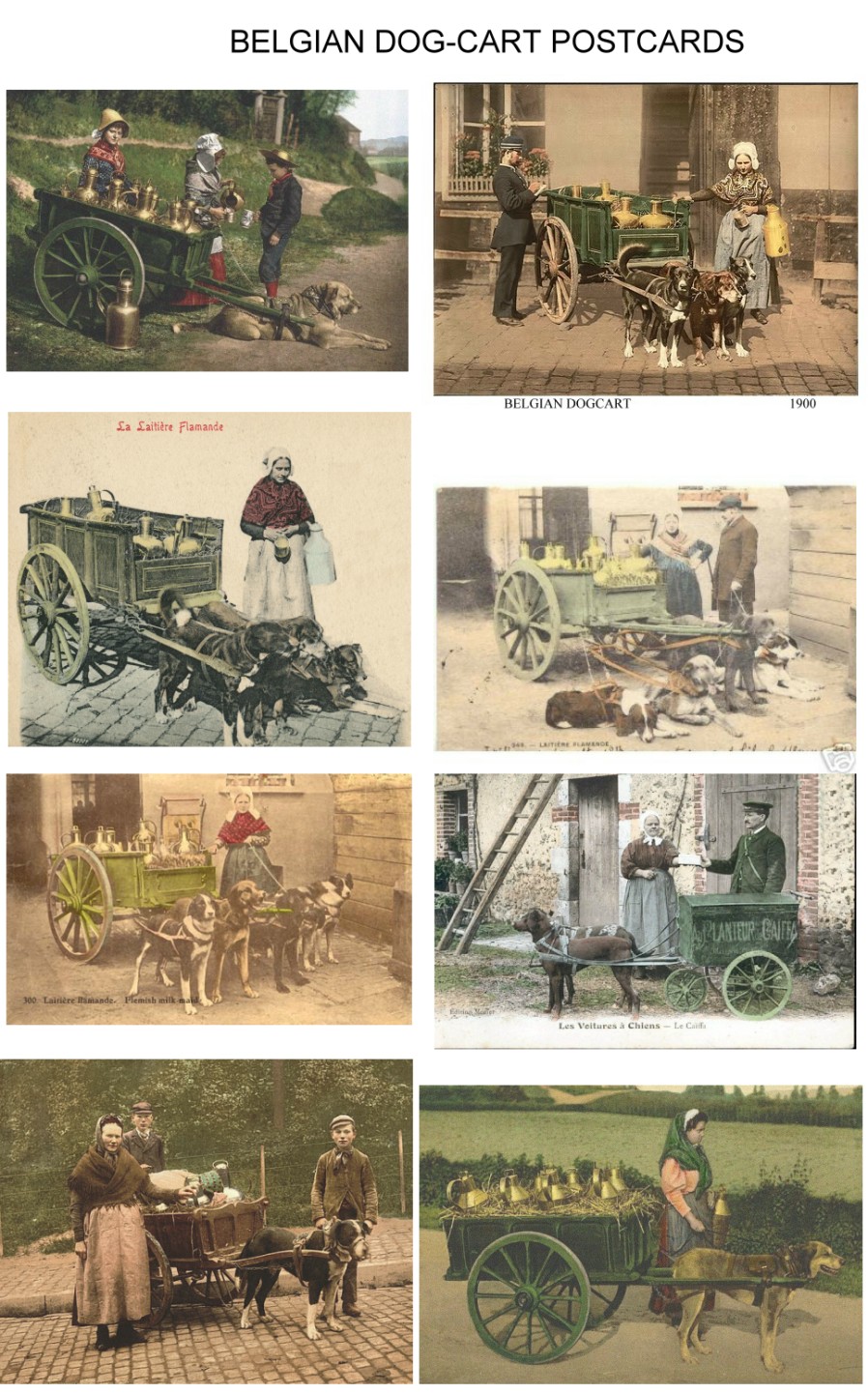
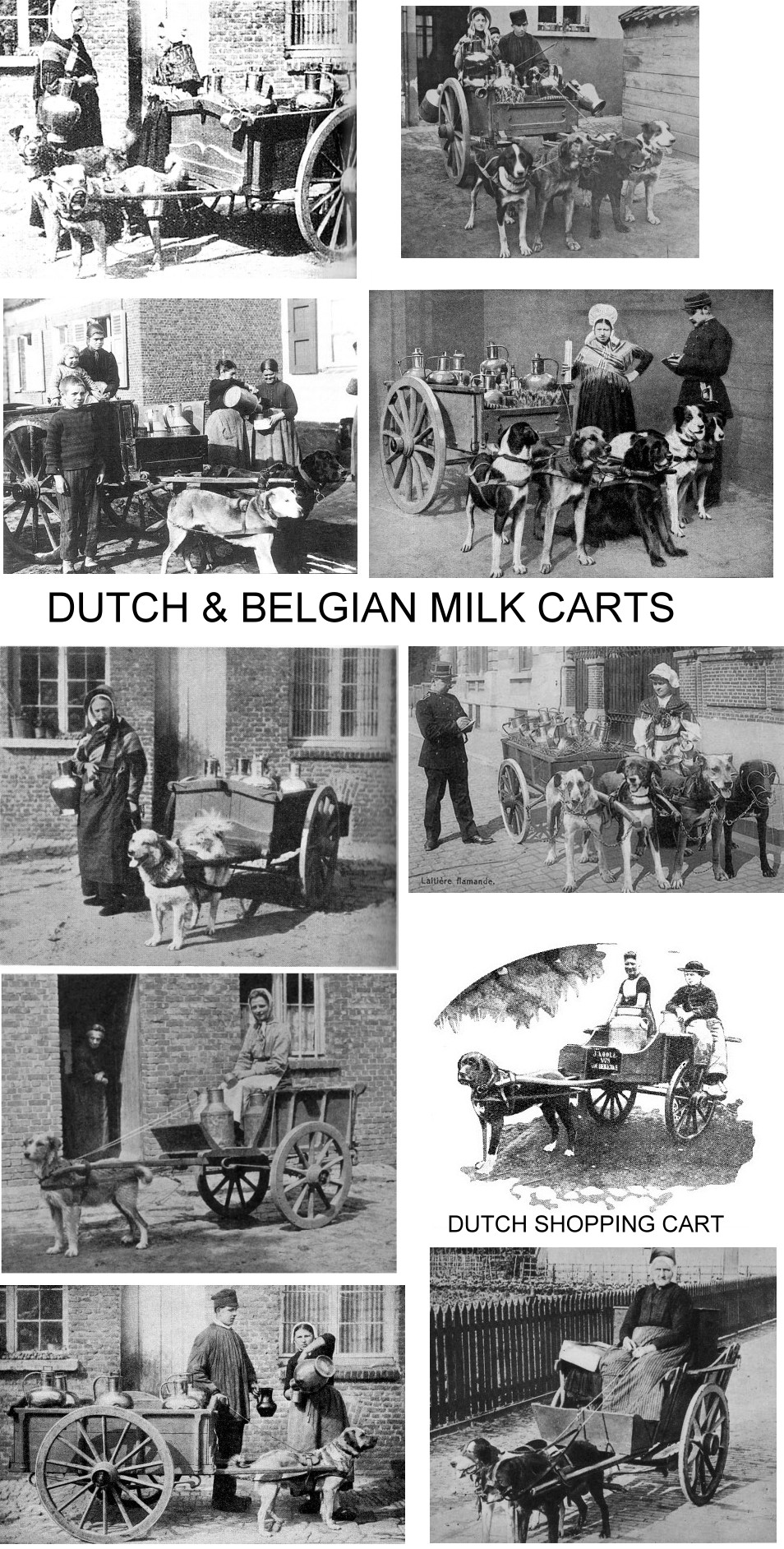
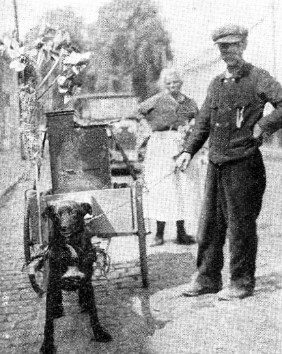
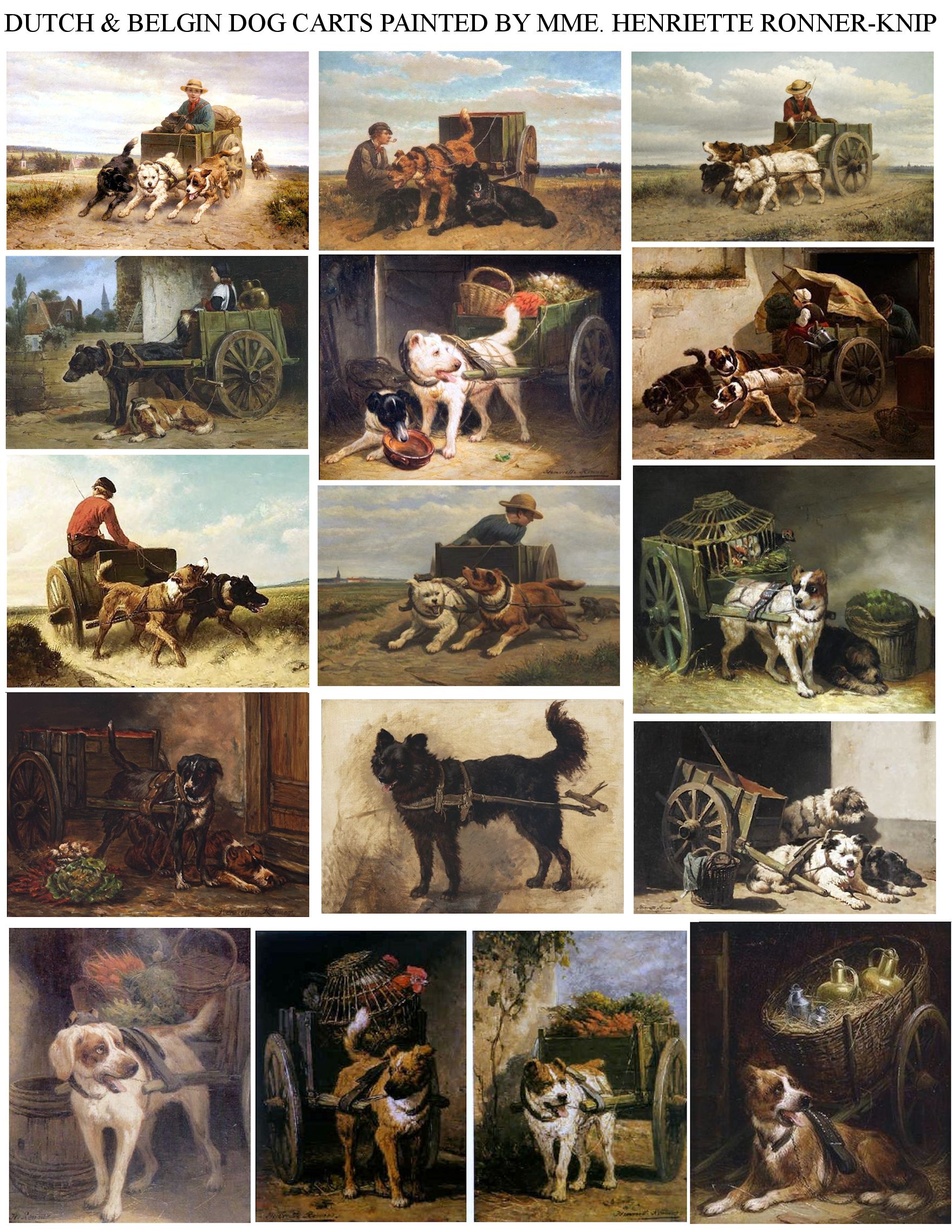
Although sled-dogs are well known, dogs have long been used to pull wheeled carts. This was banned in Britain around the beginning of the 20th Century as being cruel, but dogs were still traditionally used to pull milk carts in continental Europe. Most of these photos are from Belgium at the end of the 19th and beginning of the 20th Century. Dog-carts have been used in Belgium, France, Germany, the Netherlands and Switzerland, not only for milk, but also for selling bread, vegetables and other produce. Dog-carts were also used in Quebec, Canada around the same period, the wares including newspapers and water dispensed from a large keg.
SPANISH DONKEYS IN PLACE OF DRAUGHT DOGS - The Brooklyn Daily Eagle, May 20, 1900
Every American who has been on the continent has been struck at seeing the number of dogs harnessed to small wagons and doing draught service. It has always seemed to me that this was a most excellent application of the immense dog power that would otherwise run to waste in these countries; and I thought that in countries where women hear such heavy burdens it was but just that dogs, too, should contribute their part in dragging forward the car of human progress. But the Society for the Prevention of Cruelty to Animals here takes a different view of the draught dog question. Within the past six months it has begun to import Spanish donkeys into Germany to take the places of the dogs; and now it is a common sight to see a pair of these hardy little animals drawing an undersized wagon about the streets. They are nuts for the children; wherever the donkey cart stops the little ones gather around to wonder at and caress the long eared denizens of Spain. It has a peculiar effect to hear one of these creatures braying in the busy streets of Berlin.
Even today, there are a few dog-drawn milk carts in France and Belgium - used for delivery churns from small farms to the dairy for processing - but these environmentally friendly carts tend to be novel forms of exercise for the dogs rather than necessity for the owners. In recent years, the racing of wheeled dog-sleds has begun in Britain and dog carts may once again make a comeback, albeit as a fun activity for dogs and owners (with due attention given to the dogs' welfare).
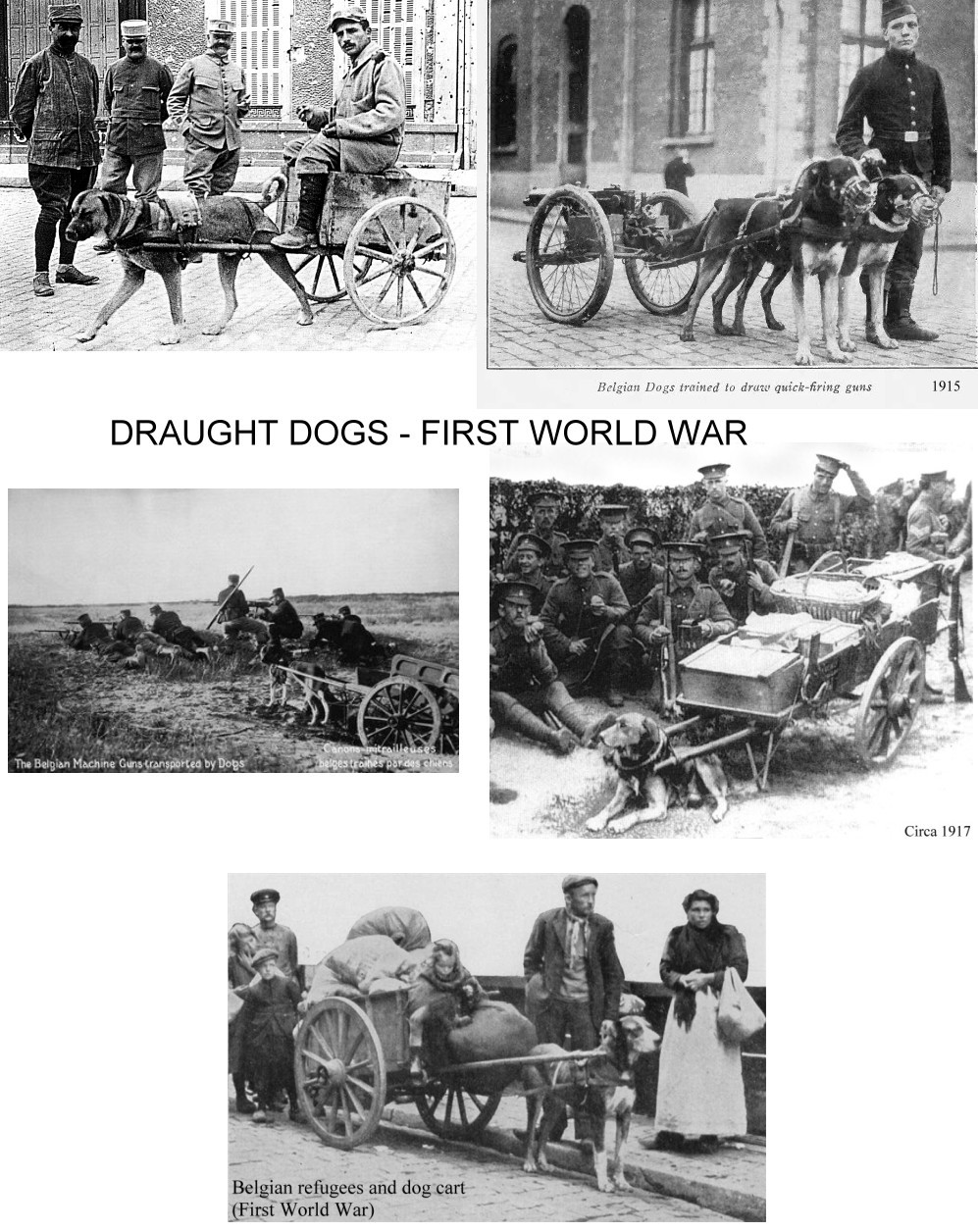
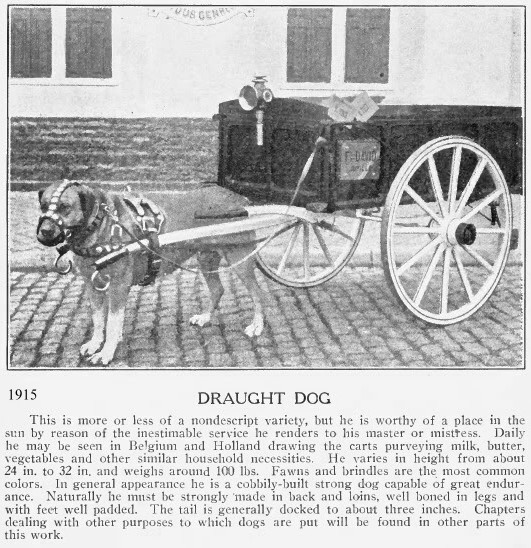
Draught dogs during First World War. W E Mason described the purpose-bred Draught Dog in "Dogs of All Nations" (1915): "This is more or less of a nondescript variety, but he is worthy of a place in the sun [worthy of a mention] by reason of the inestimable service he renders to his master or mistress. Daily he may be seen in Belgium and Holland drawing the carts purveying milk, butter, vegetables and other similar household necessities. He varies in height from about 24 in. to 32 in. and weighs around 100 Ibs. Fawns and brindles are the most common colors. In general appearance he is a cobbily-built strong dog capable of great endurance. Naturally he must be strongly 'made in back and loins, well boned in legs and with feet well padded. The tail is generally docked to about three inches."
Flemish dog-drawn carts were a popular subject for postcards in the late 1800s/early 1900s. Many show milk-carts, often with a milk inspector.
Flemish dog-drawn carts were a popular subject for postcards in the late 1800s/early 1900s. Many show milk-carts, often with a milk inspector.
Dutch or Belgian draught dog, 1915.
Dutch or Belgian draught dog, 1915.
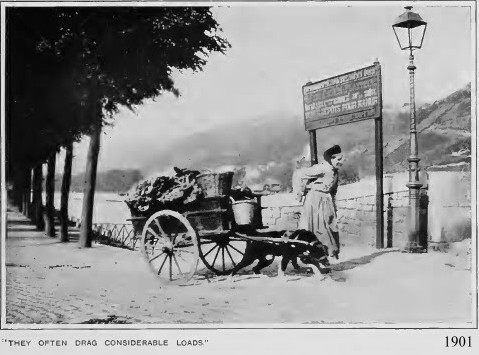
Draught dog pulling a considerable load, 1901.
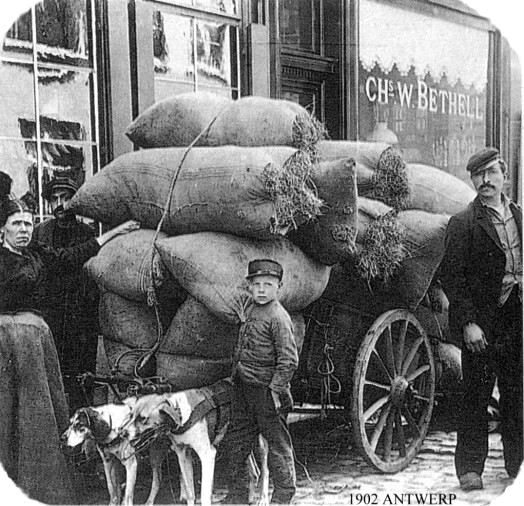
Draught dog pulling a considerable load, Antwerp, 1902.
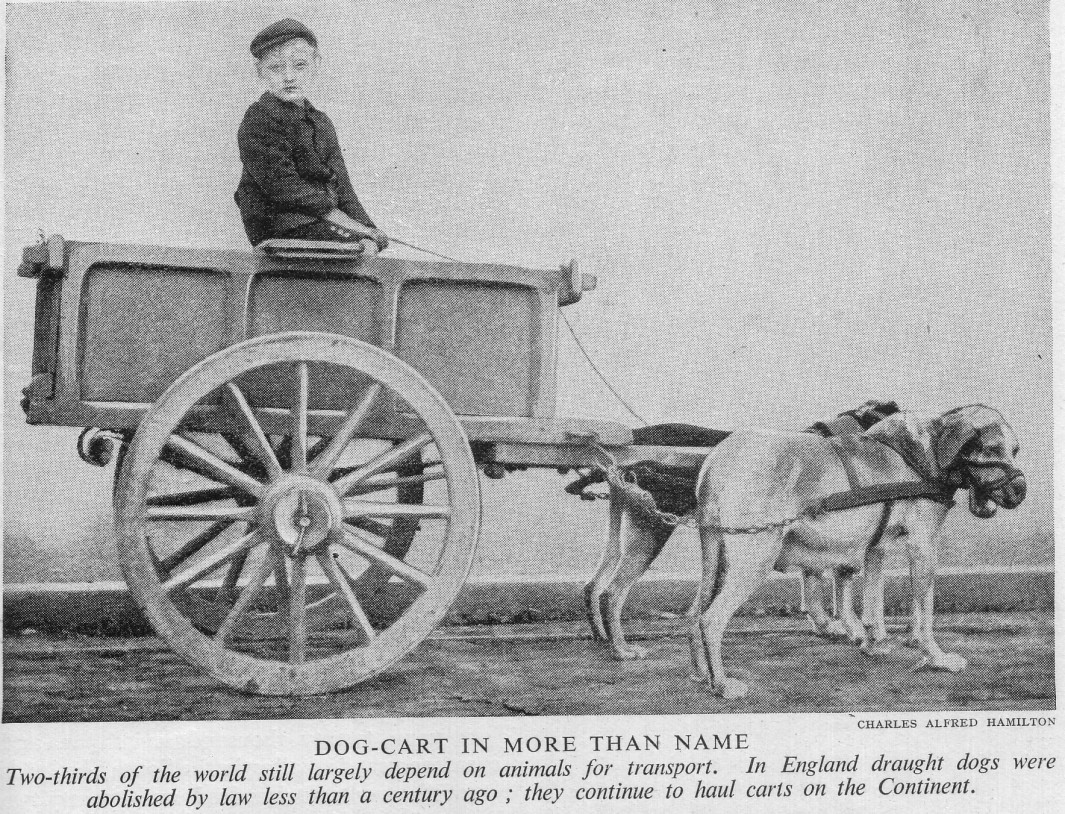
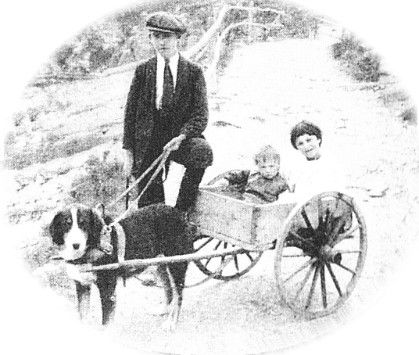
Two children being transported in a dog-cart.
A dog-drawn monkey-organ cart (late 19th or early 20th century).
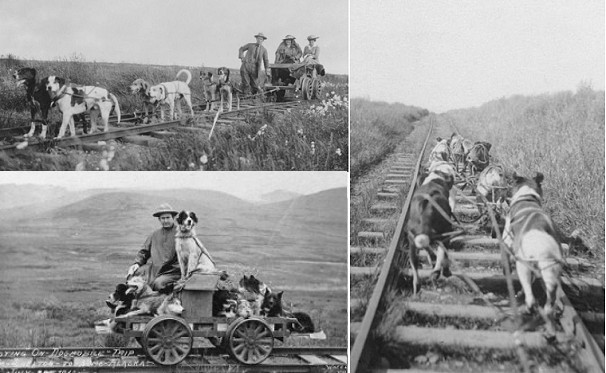
The "Pup-mobile" (1906) was a dog-cart that ran on the railway track near Nome, Alaska. The weight of railway rolling stock (especially the metal wheels) meant it was drawn by a team of 7 or 8 dogs and had more in common with a dog-sled team than with the European dog-carts.
Dogcarts were generally used for transporting goods or people by those
who could not afford equines or oxen or where there wasn't enough room
to manouevre those larger draught animals e.g. in narrow streets or
crowded cities. In rural areas, the dogs were multi-purpose and might
also be household guard dogs. During the First Crusade, after the
horses and mules had starved, dogs carried people and supplies towards
Jerusalem. Dog carts also have the advantage that the dogs guarded the
contents. The original name of the popular Rottweiler was "Rottweiler Metzgerhund" meaning "Rottweil butcher's dog". As well as herding and guarding duties, these large and powerful dogs were used by butchers to pull carts of meat and other products to market.
Dog carts remained widespread into the 19th and early 20th centuries. It
was not the rise of the motorcar that wiped them out, it was the
somewhat misplaced concern of animal welfare organisations that believed
using dogs for haulage was ill-treatment while accepting the use of
horses, donkeys, mules and oxen. While a few dogs were mistreated (as
were equines and oxen), the majority of dogcart owners regarded their
dogs as friends. Meanwhile, horses and oxen might be considered merely
living motors and risked being worked to death; the unfortunate horses
and donkeys often ended up as food for the dogs via the thriving
knackers yards. In turn, the dogs' faeces collected from the street was
used in the leather-tanning industry.
In England, the RSPCA regarded dog-carting as "cruel servitude", yet
permitted the use of draught horses and oxen. This typified the
confused English attitude towards different animal species. In 1839,
the Dog Cart Nuisance Act prohibited the use of cart dogs within 15
miles of London's Charing Cross rail station. The fear of the spread of
rabies, believed to be exacerbated by overworked dogs, led to a ban on
all draught dogs and a tax on working dogs such as sheepdogs (whose
tails were docked to show they were taxed). Poorer households that
relied on working dogs for their livelihood could not afford to keep
dogs that weren't permitted to work. Many dogs were abandoned to starve
and at least 150,000 were destroyed in the first year of the new
legislation. Often children replaced the dogs in pulling the carts,
there being no laws against child labour.
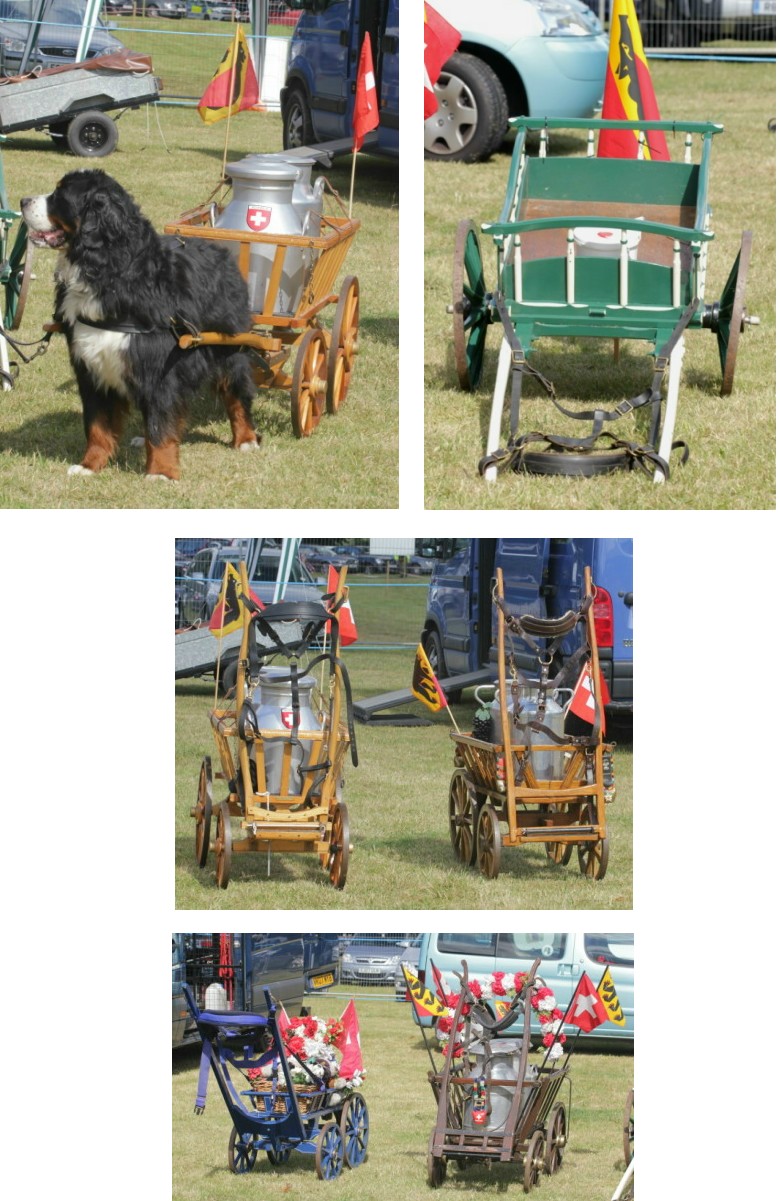
In Continental Europe, legislation was aimed at ensuring dogs had a comfortably fitting harness, could lie down and rest without being unhitched and were not overloaded. Although dog-carts are not legal on British roads, gaily-painted European-style milk-carts are popular attractions at dog-shows as the photos of this Bernese dog and his various carts demonstrate. Far from being cruelly treated, this dog clearly enjoys his "work".
Bernese dog with Swiss milk-carts and flower-cart (2011 Essex Dog Day, Crix, Hatfield Peveral, Essex)
While not road-legal in Britain, modern dogcarts are used for
recreational purposes such as carting on grass or dirt trails, dog-drawn
child-size carts and dogs accompanying hikers might also pull light
supply carts/sleds. Most dogs enjoy being working members of their
human pack. Today, the RSPCA would become concerned if the dog was in
poor condition, the harness was poorly fitted, the dog was overworked or
the load was too heavy. Dogcarts are unlikely to become road legal
because modern traffic is too dangerous and because of dog-fouling laws.
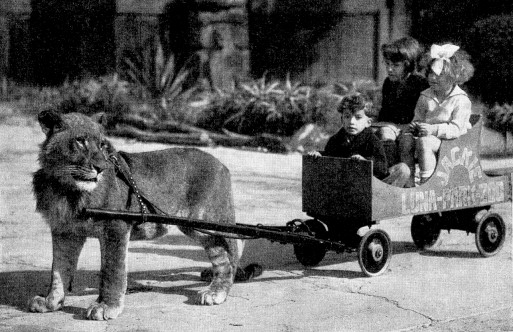
LIONCARTS
This young lion in an American zoo (circa 1930) is pulling a cart with young children in. Once it is fully grown, it would not be safe to harness a lion to give cart rides to children.
PROHIBITION OF DOGCARTS IN BRITAIN
The Metropolitan Police Act of 1839 ordered that they were not to be used within fifteen miles of Charing Cross. The legislation stated:
"XXXIV. [Prohibition of Dog Carts.] And be it further enacted, That after the First Day of January next every Person who within the City of London and the Liberties thereof shall use any Dog for the Purpose of drawing or helping to draw any Cart, Carriage, Truck, or Barrow, shall be liable to a Penalty not more than Forty Shillings for the First Offence, and not more than Five Pounds for the Second or any following Offence."
It was considered that the carts were cruel to dogs as they were liable to be overloaded; some owners unable to maintain a pony within London seemed to expect a dog to pull similar loads. The prohibition was also a measure thought to limit rabies as over-worked dogs were believed to be especially prone to contracting the disease. According to the medical journal 'The Lancet' in 1841, there had been a decline in the number of cases of rabies in London since the act was passed: "Whether the police or the Dog-Cart Act have had anything to do with the decline of hydrophobia, we cannot say".
Having banned dog-carts within London, a more general bill was introduced into Parliament in 1841, to ban the use of dog-carts throughout the kingdom. The banning of dog-carts was part of a succession of Acts of Parliament intended to limit cruelty to animals, starting with the Cruelty to Animals Act 1822 (banning cruel treatment of horses and cattle) and the Cruelty to Animals Act 1835 (banning all animal-baiting and animal-fighting bloodsports). Parliamentary debates are recorded in Hansard and the speeches show that humanitarian considerations were foremost in the minds of those who proposed the motion, although dog-carts may also have caused a nuisance to horse-drawn traffic.
Mr. Pryme opposed the motion. The Bill was an interference with a humble class of traders. He was glad to see his right hon. Friend the Chancellor of the Exchequer in the House. If his right hon. Friend would consent to allow an ass to be used [laughter], it might seem very ludicrous to the House to name the animal; it might perhaps be more agreeable to right 1356 hon. Gentlemen if he called the animal by the name of donkey. What he meant to say was, that if an ass were allowed to be used with the same license as was paid for using a dog, it would tend materially to lessen the number of dog carts, at least by one-tenth, throughout the country. He would conclude by moving that the Bill be committed this day six months.
Mr. Warburton seconded the motion, because he was satisfied that it was a waste of the time of the House to legislate on such trivial matters. Last year it had been attempted to excite a feeling on the subject by appealing to their humanity, and stating that the dog was not proper for a beast of draught, surely those who had made such a statement must have forgotten the Kamschatka dogs. The object of the measure was to prevent persons possessed of small means and in humble life, who could not afford to employ other animals, from doing their best to gain a livelihood. If the reason for putting down these carts was that dogs were small animals and liable to throw down horses, then they ought to graduate the dimensions of all animals suffered to draw in the streets, and to prohibit Shetland ponies.
Sir It. H. Inglis said, that having the honour to be one of the persons whose names were on the back of this bill, he would just shortly reply to the objections of the hon. mover and seconder of the amendment, that the more straightforward course for getting rid of this bill would be, by moving that so much of the Metropolitan Police Act as relates to the use of dogs in drawing carts and other vehicles be repealed. He could not see why the dogs in the country should be treated worse than the dogs of London. The hon. Member for Bridport had spoken of the dogs of Kamschatka, but he might have come still nearer home, for dogs were used as beasts of draught in Lapland and in Holland. But in Lapland and Kamschatka they ran over snow, and in Holland upon sand; therefore they did not suffer in the same way as in this country. He supposed, that the hon. Gentleman the Under Secretary of State, did not attach less importance to humanity now, than when he supported the measure which applied to the metropolis; and therefore he expected he would vote for this bill.
Mr. Hume said, that he had been a Member of the committee before which the 1357 evidence was taken which led to the proposal of this bill. Upon the evidence adduced before that committee he would not give it his support. If the question were one of humanity, why should donkeys be allowed to be ridden? He believed there were no animals who were worse used than donkeys, and if the question were put on the ground of humanity, the bill should be applied to them. There was no doubt any animals might be abused, but that was no reason why they should never be employed. There were laws already in existence to punish cruelty to animals, and he thought it better to leave the dogs to the protection of those laws. Every one might see that dogs drew carts with the greatest pleasure, at least they seemed to have a great desire to do so. He thought the House should not legislate upon matters which it would be much better to leave to the good sense and humane feelings of the community.
Mr. East replied. He had introduced the bill for the purpose of supposing those cruelties to dogs which took place no less in the country than in town. It should always be remembered, that the feet of dogs were not protected by nature so as to enable them to bear heavy weights. The bill was extremely simple, following closely the provisions of the Metropolitan Act, but extending it to the country. The dogcart nuisance was not only offensive to humanity, but was oftentimes productive of serious consequences. Only within the last few months the Lynn coach had been overturned by a dogcart, and much mischief was the result. He hoped, therefore, that the House would allow the bill to be proceeded with.
An outright ban would also have been easier and cheaper to implement than rules and restrictions on the loading of dog-carts, the correct fitting of harness, the number of hours a dog could work before needing a rest and the provision of drinking facilities (in the same way that horse troughs were provided) etc. It was a case of using a legislative sledgehammer to crack a nut.